


Propane powers new opportunities for agricultural irrigation
According to the U.S. Department of Agriculture’s (USDA) Irrigation and Water Management Survey (IWMS), farmers spent $3.26 billion in 2023 on energy to power pumps that irrigate crops.

The IWMS tabulates this data every five years by energy source. Most of the pumps are electric-powered, but next in line is diesel, with propane and other sources to follow. Notably, there are 95,810 diesel pumps that are prime targets for propane replacement. Overall, electricity has gained the most market share over the past 20 years.
A closer look at this survey data shows a decline for propane over the years. The exception was in 2013, when we saw 10 percent growth in propane engines over 2008. The growth aligns with efforts by the Propane Education & Research Council (PERC) to develop engines, test them, document performance and tell the story to the agriculture community.
PERC also developed an incentive program to help boost trial and adoption. Those efforts likely helped boost sales, but sadly, the growth did not resonate in later USDA surveys. We lost ground in 2018, with propane engine numbers holding flat in 2023. The number of propane pumps was roughly 11,000 in 2023, which is 18 percent below 2013 figures.
Diesel engines have also lost ground to electric pumps. The overall pump market has grown 24 percent from 2003-23, but electricity has captured the market share.
However, electric pumps can present a propane opportunity through propane power generation. As areas experience grid overload, instability and reliability issues, it can become necessary to power electric pumps with a propane prime power generator.
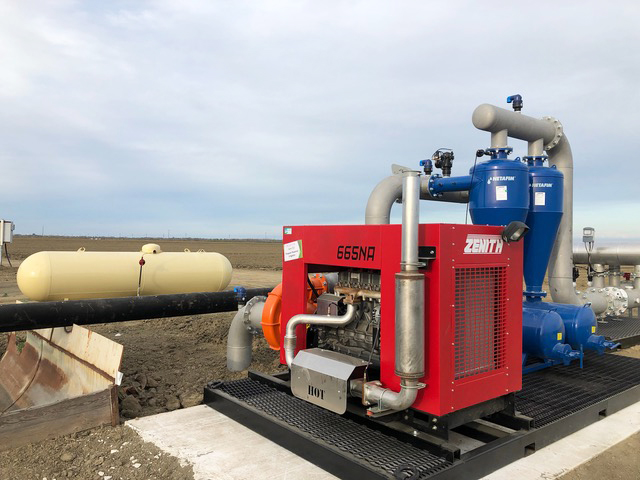
▶ Propane engine success in California
The potential to save customers money by switching to clean-burning propane engines is what gets Shari Pedersen up in the morning.
Pedersen is the irrigation sales lead for N&S Tractor, based in California. She’s been selling propane irrigation engines and generators for more than a dozen years. Before moving into her current equipment sales role, she worked for a Napa-based propane marketer, selling propane and other products to farmers and others. She has more than 20 years of experience with propane and/or engines.
“I began marketing propane engines back in 2013 after learning the benefits that new products can provide to growers,” she says. “I formed a coalition of support and set out to introduce irrigation engines to customers.”
Pedersen credits a supportive team at her propane company, along with eager engine suppliers, propane associations and industry consultants, with helping her get started.
A great way to introduce the product to customers is through demonstration events carried out with key partners. Pedersen invited farmers to attend an event, often including a meal, and presented data and a comprehensive solution that included live equipment demonstrations when possible.
“It was necessary for farmers to see the full range of support for the engine, fuel service and irrigation system to deal with all possible objections,” Pedersen says.
And the economics speak for themselves. “We were able to show farmers significant fuel savings, further improved by various incentives that help encourage trial and adoption,” she adds.
There’s a unique combination of benefits that favor propane engines over diesel. First, we know modern propane engines burn cleaner. Propane engines can reduce exhaust emissions, particularly oxides of carbon and nitrogen. Propane engines do not require diesel exhaust fluid. Propane is more difficult to steal than diesel, reducing theft losses. And in the rare event of a spill or leak, propane will not contaminate the soil like diesel.
As for the availability of propane engines, Pedersen can provide customers with a good selection.
“We have a wide variety of engines available from multiple manufacturers that range from 20 to 275 horsepower,” she says. “A change in recent years has been the introduction of more models built from heavy-duty, diesel-type engine blocks. We began with a family of engines that were mostly based on medium-duty gasoline blocks. These served us well, however farmers expressed interest in heavy-duty models, for more extreme applications, and suppliers have responded.”
The key to repeat business and market growth is outstanding service. According to Pedersen, “N&S Tractor offers complete warranty, service and parts support for the equipment, and we partner with propane companies that provide first-class fuel service and fair pricing.”
They are currently testing conversions from electric to propane. In some cases, the reliability and cost of electricity are unacceptable, and farmers are looking to convert to engine-driven, on-site power sources. Electric conversions represent a significant emerging opportunity for propane engines and propane-fueled generators.
Pedersen encourages propane marketers interested in developing this market to first learn all you can. Form solid partnerships with equipment suppliers and make sure to set up appropriate summer fuel pricing for your farmers.
“At the end of the day, farmers want reliability,” she adds. “Reliable engines, fuel supply, service and pricing can lead to success.”
Mark Leitman is an 18-year veteran of the propane industry, having served many years leading agricultural and off-road programs for the Propane Education & Research Council. He most recently served as director of sales and power division director for Blue Star Gas. He works as a consultant and freelance writer for clients in the agricultural and energy sectors.
Featured homepage image: vovashevchuk/iStock/Getty Images Plus/Getty Images
Related articles
Can innovation fuel a comeback after agriculture propane demand plummets?
Agricultural trends point to opportunity for propane in 2026
You May Also Like
-
ThompsonGas acquires Dixie LP Gas and Gas Heat
Oct 22, 2026





Subscribe to LP Gas
If you enjoyed this article, subscribe to LP Gas to receive more articles just like it.