


PPATEC expands opportunities for propane workforce development
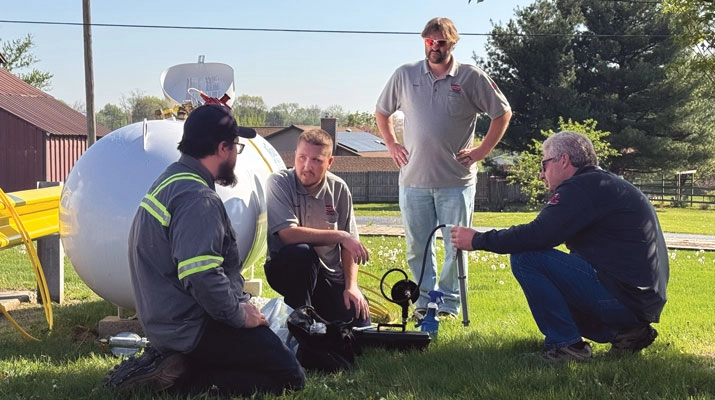
The Pennsylvania Petroleum Association (PPA) is tackling the propane industry’s workforce challenges head-on with the expansion of its Pennsylvania Petroleum Association Technical Education Center (PPATEC) in Grantville, Pennsylvania.
Opening its doors last July, the PPATEC serves as a hands-on training facility designed to better prepare the next generation of technicians. As companies grapple with hiring and retention, the new center represents a coordinated effort to strengthen recruitment, accelerate training and create a more sustainable workforce pipeline.
Ted Harris, executive vice president of the PPA, notes the school is well diversified, with the teaching of HVAC, deliverable fuels like oil and propane, and other connected sectors.
“We have two parallels – one is continuous training for employees already in the field, and the other is creating a pathway for people to enter the industry,” he says. “We’re leaning the education toward what we believe students need to be successful working for a propane company. It’s much more industry-focused compared to other trade schools.”
The program is designed to serve new entrants to the workforce and current employees looking to expand their skill sets.
▶ The hands-on approach
Gary Nouse, an industry veteran of more than four decades, is leading the strategic direction and instructional offerings of the center’s propane training curriculum. He notes that there’s an emphasis now on on-the-job training, but some companies take it seriously and some just check the boxes. His goal is to make sure training is done the right way, with real understanding and experience behind it.

“As we move from the old CETP program into the PEP program, there’s more emphasis on task-based training and real on-the-job application,” he says, referencing the Propane Education & Research Council’s education program.
“One of my passions right now is making sure employees are getting more hands-on training than they ever have,” he adds. “I’ve done almost every task imaginable in this industry, and I want to relay that experience and show them this is how it’s done, this is what you’re going to run into and here are the things that can go wrong.”
With that in mind, those in the program aren’t just sitting through a PowerPoint or watching a video; they’re engaged and actually doing the work with their hands.
“In the older curriculum, there was a lot of redundancy,” Nouse says. “You’d go through the same basic theory multiple times. Now the training is more focused on specific tasks. I’m seeing a lot of excitement from employees because of that. Traditionally, someone would go out with a technician and learn on the job, which was good, but it depended on who was teaching them. Some people have all the knowledge but aren’t good teachers. Here, we’re combining knowledge, experience and facilities to deliver that hands-on approach.”
Mike DeBerdine, CEO of Rhoads Energy, emphasizes the importance of hands-on training, as that’s what’s going to help people grow and make an impact in the field.
“The trades are hands-on jobs,” he says. “You need to be able to see it, touch it, feel it, break down the equipment, analyze it and fix it. That’s how people learn.”
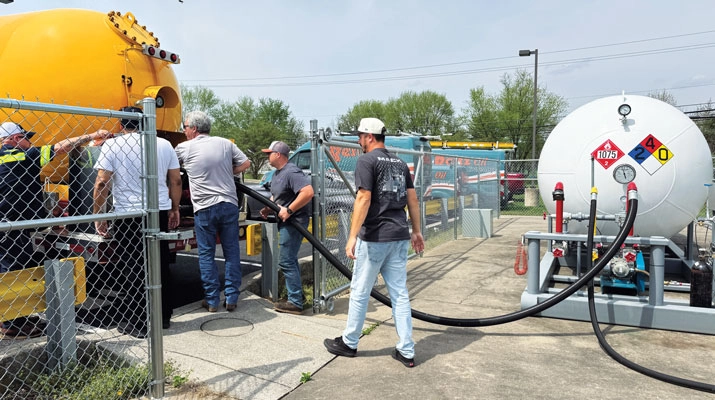
Aaron Becker, president of Hiltz Propane Systems, which donated an 8,000-gallon bulk plant (consisting of the tank, the materials, controls, pumps, etc.) to the PPATEC facility, has seen a gap in propane infrastructure technicians.
“Hiltz knew early on this was something we wanted to support,” he says. “It’s about investing in the future of the industry. This is going to have ripple effects as it’s impacting something bigger than any one company.”
You May Also Like
-
Faces & Places: September 2026
Sep 21, 2026





Subscribe to LP Gas
If you enjoyed this article, subscribe to LP Gas to receive more articles just like it.