


PPATEC expands opportunities for propane workforce development
▶ Dedicated training facility
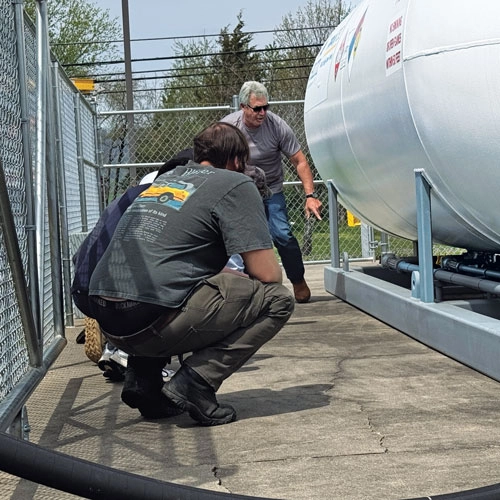
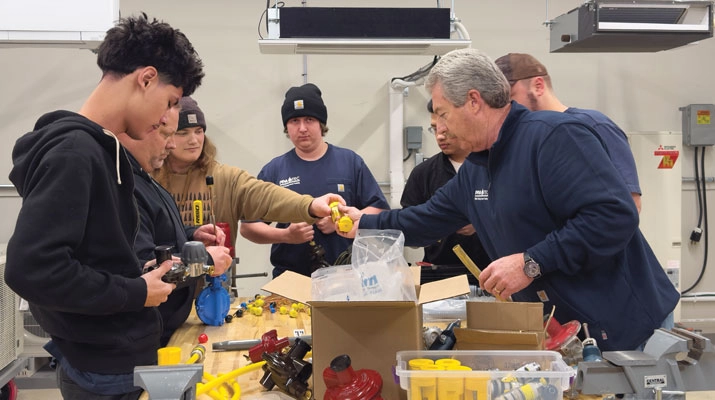
The new PPATEC is three times larger than any previous training center, so the instructors can duplicate most of the scenarios a technician would see in the field. The facility includes multiple classrooms and hands-on training labs designed to replicate real-world propane and HVAC scenarios.
“That’s something we couldn’t do before,” Harris says. “Being a trade association, we have direct connections with marketers, manufacturers and suppliers who can donate equipment and help us build out that real-world training experience. That connection to industry is what makes this model unique.”
DeBerdine adds that previously, there was no central location with a robust propane-focused training center.
“A lot of training was being done in hotel meeting rooms or scattered locations,” he says. “This facility brings everything together with more equipment and a true hands-on focus. With on-the-job training, you might get three or four service calls with a mentor, and then you’re moving on. That takes time. In a training center, you’re laser-focused for 10 straight weeks, and your learning curve is accelerated tremendously.”
▶ Workforce shortages and gaps
Workforce development has long been a concern for the propane industry, but in recent years, it has become more urgent as demographic shifts and changing career paths reshape the labor pool.
Harris notes that the PPA wanted to take a more active role in building a sustainable pipeline of workers, which was a driving force for the PPATEC facility.
“As an association, we represent our membership, and there are opportunities where, if there are gaps from an industry perspective, trade associations can step in and fill those gaps,” he says. “Workforce development has always been relevant – it was relevant 20 years ago, and it will be relevant 20 years from now. We felt there was a necessity for the association to purposely put a strategic effort behind this and take more vertical ownership of the workforce development funnel that our industry needs to be successful.”
One of the issues is that propane careers are often overlooked in traditional education pathways.
“Deliverable fuels are underserved at trade schools,” Harris says. “No one really thinks about a career as a propane technician or a heating oil service technician. Trade schools may touch on it, but it’s not anywhere close to the level of what we’re doing as a trade association that’s extremely industry-focused on our curriculum.”
DeBerdine notes the labor shortage is tied to a generational gap that has been years in the making.
“The industry has had a long workforce, but the latest generation focused away from the trades, in part because of encouragement to pursue college education,” he says. “That created a big gap. There’s a group of people in their 50s and 60s who have been in the industry for decades, but we missed a whole generation in their 30s.”
While interest in the trades is beginning to rebound, the need for structured training remains critical.
“That is changing now with the high cost of education and the realization that trades offer long-term opportunity,” DeBerdine says. “Interest is coming back, and schools are booming, but it’s still a serious issue. We need to train these students quickly – we can’t wait for strictly on-the-job training.”
From the supplier side, the challenge is less about attracting people and more about preparing them to succeed in the field.
“It’s not necessarily a shortage of people who want to get into the trades,” Becker says. “The biggest gap is true industry knowledge and dedicated technical development. When people enter the trades, they’re very green. We need to give them the opportunity to accelerate as quickly as they can so they can make an impact for the companies they’re joining.”
▶ Looking ahead
Early results have been encouraging, with program graduates quickly finding positions with propane marketers and entering the workforce with a stronger foundation.
As the industry works to close its workforce gap, leaders agree that initiatives like PPATEC are only the beginning.
“We’re competing with other industries for young people deciding what they want to do with their careers,” Harris says. “Having a trade school owned and operated by the deliverable energy industry is a commitment to the future of our workforce.”
For Nouse, the mission is just as clear.
“What I’m hearing from employees is, ‘I actually learned how to do it,’” he says. “That builds confidence, and that’s what this is all about.”
Related articles
PPATEC welcomes Gary Nouse as instructor to lead propane training program
PPATEC graduates prepare for industry careers
You May Also Like
-
Faces & Places: September 2026
Sep 21, 2026





Subscribe to LP Gas
If you enjoyed this article, subscribe to LP Gas to receive more articles just like it.