


Propane’s growth opportunity in the equipment rental market
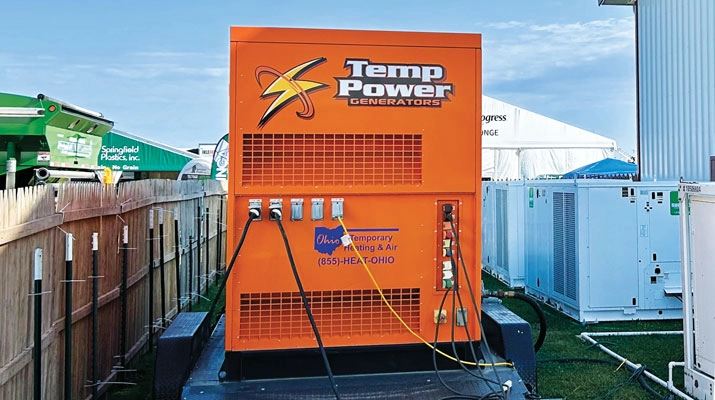
Last summer, I attended the Farm Progress Show in Illinois. I love to see what’s new and improved at these large events and was happy to see propane power generation at work.
Propane generators provided power for select buildings, services and portable cooling systems. The equipment was provided by a rental company that I will highlight a bit later. Seeing the equipment in action got me thinking about the opportunity for propane to provide temporary heat, cooling and portable electric power, along with the broader opportunity to power additional rental or contractor fleet equipment.
According to the American Rental Association, the equipment rental market is projected to grow to $82.9 billion in 2026. Specialized equipment needs, along with the rising cost of equipment, are favoring rental over ownership as contractors seek to control capital budgets.
This month, I spoke to a couple of people who are involved in providing equipment for contractors. They certainly believe the propane industry has great upside potential to grow demand through various machines within this rental/portable category of applications.
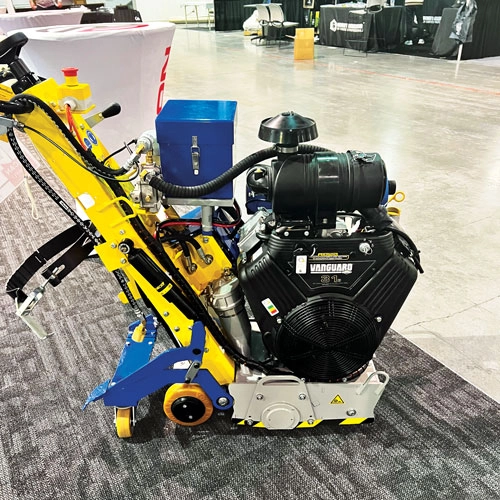
It’s true – we have many propane technologies that can be utilized by rental fleets. Many are engine driven, some are heaters, and there are a few other applications. Perhaps some lesser-known, yet successful examples of propane equipment are the machines used for concrete cutting and grinding. The adjacent category of floor buffing equipment also relies on propane. In addition, forklifts, generators, lifts and heaters are other examples of portable rental and construction equipment.
▶ Small engine solutions
Jake Coker is the director of propane applications for Propane Power Systems, a supplier of propane small engine conversion solutions to original equipment manufacturers. They offer propane kits for Vanguard engines and others, ranging from 5 to 40 horsepower.
“Concrete equipment is a solid market for us. These machines often operate indoors, cutting, grinding or polishing concrete surfaces,” Coker says. “We’re also gaining traction in various propane generator applications,” which is due in part to propane’s storability advantages over gasoline.
These machines are sometimes owned by the service provider but are often found at various equipment rental outlets.
“Our small engine solutions are common among indoor applications, but we’re trying to educate customers about propane’s advantages in all applications, indoor and outdoor,” Coker says.
There’s tremendous opportunity for propane to do more in the commercial power equipment space, with propane-fueled engines. Coker knows propane comes with an excellent set of benefits but finds that customers lack knowledge about propane relative to other sources.
“The fuel is affordable compared to gas and diesel; it’s better suited to long-term storage; it burns cleaner and is better for the environment,” he adds. “We must continue to promote the benefits and educate consumers, and once people learn and experience the benefits of propane, they can become users for life.”
▶ Propane as the preferred option
Ed Parker is the owner of Ohio Temporary Heating & Air, near Columbus, Ohio. He and his partners operate seven locations, including Tri-State Heating & Air near Louisville, Kentucky; Indiana Temporary Heating & Air in Indianapolis; and five locations throughout Ohio. They operate a fleet of 400 propane generators and over 8,000 pieces of equipment.
“We’ve been using propane equipment for 20 years, and our customers love it,” he says, adding how customers utilize the equipment in all facets of construction and remodeling. They also use the machines for disaster response, events and festivals. “Our customers appreciate propane’s benefits on the jobsite to power all sorts of construction heating or cooling, as well as generators that provide electricity.”
Customers appreciate propane’s clean-burning properties, he adds, and it’s much more affordable than competing fuels. “For us, it’s a no-brainer,” he continues. “The economics and performance are excellent.”
Parker and his partners depend on reliable fuel suppliers to set propane tanks and ensure the fuel supply is uninterrupted and offered at a fair price. “Having dependable and responsive propane service is critical to our success,” he adds.
Parker has used a variety of propane generators over the years. Sizes range from 14 to 300 kilowatts. Some carry onboard fuel, and some do not. Overall, they have performed well over the years, he says, and the benefits of propane have made them a preferred option for everyone involved.
“The market is there for propane generators and fuel. With continued support from equipment manufacturers and propane suppliers, I have no doubt we can continue to grow,” says Parker, whose company fleet features at least 20 vehicles operating on autogas.
When asked what advice he would give to others, Parker suggests developing a strong partnership between a propane provider and a rental company.
“Start small and make sure you can be responsive to your commitments,” he says. “You must provide top-notch service and build upon your success.”
Propane marketers interested in growing their businesses should explore partnerships with rental fleets, contractors, builders and manufacturers. Find the likely opportunities in your area and don’t be afraid to develop a low-risk trial program to give customers a chance to test something new. Keep an eye out for incentives that may encourage trials of new low-emission propane equipment, which can help offset costs.
Related articles
Propane powers new opportunities for agricultural irrigation
Industry leaders on tapping into the power generation market
You May Also Like
-

Basin Coop acquires Inter-Mountain Propane
Sep 17, 2026 -

How to hire for safety in the propane industry
Sep 17, 2026



Subscribe to LP Gas
If you enjoyed this article, subscribe to LP Gas to receive more articles just like it.