


Feast or famine: A winter of extremes for propane marketers
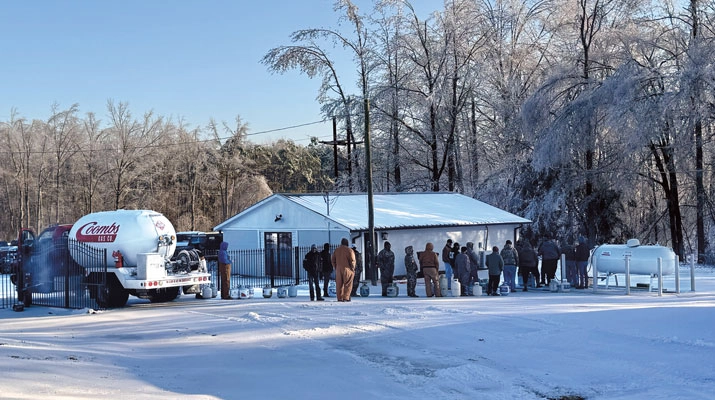
Propane marketers from coast to coast experienced the unpredictability and inconsistencies of another winter heating season in 2025-26.
A lot – or in some cases, very little – can happen between October and March, part of the year when the industry defines much of its success.
Whether it’s navigating the heating season or the months before and after, marketers realize that change is the only constant in this business.
“This is an industry that, seasonally, it’s feast or famine,” says Chris Hill, president and CEO of Meritum Energy and chair of the Propane Education & Research Council (PERC).
“You have 10 months out of the year where you think you have too many assets and too much storage, and then you have two months where you think you’re not even close to having enough,” he adds. “You have to find that balance.”
And whether that balance is of the mind or the physical makeup of the business, “feast or famine” could easily describe the 2025-26 winter, as the industry proved once again how geographically diverse it can be.
Marketers in the East, especially in New England, faced a challenging winter with record snowfall, while some states in the West set records for winter warmth, shuttering ski resorts early or, according to some reports, for the entire season.
Whatever Mother Nature brings, says PERC President and CEO Tucker Perkins, “This is the time when we defer to marketers to do their job.”
▶ Drastic differences
The perspectives of two state and regional propane association executives – Leslie Anderson of the Propane Gas Association of New England (PGANE) and Tom Clark of the Rocky Mountain Propane Association (RMPA) – help show the drastic differences in winter conditions across the United States.
Anderson says the 2025-26 winter was the busiest and most stressful she’s experienced in her nearly 10 years leading the association.
“We had solid cold across most of northern New England, and then we had record snowfall in southern New England, with a blizzard at the end of February that shut down the state of Rhode Island for three or four days with 40 in. of snow,” she says. “They had to pull all the snow plows off the road, so the snow just piled up. Rhode Island hasn’t had that much snow since the ’70s.”
Propane demand was 15 percent to 30 percent above normal for New England, says Anderson, who issued 22 email alerts – her all-time high – for different hours-of-service (HOS) waivers. The region needed one to get through the first half of March.
“We don’t abuse the hours-of-service waivers here in New England,” she says. “We still make safety a priority, but we need them because we have weather all winter long.”
To keep up with demand this past winter, New England had to use all of the storage assets and supply resources available to it – and then some.
Anderson calls the marine terminals in Newington, New Hampshire, and Providence, Rhode Island, a lifeblood for New England and says rail companies like the Vermont Rail System should don superhero capes for the good work they do for the industry.
When supply got tight, however, companies were forced to travel “halfway across the country for spot product in February,” says Anderson, naming a long list of states, including Texas, Missouri and Michigan. “That’s crazy.”
In the end, she says, marketers did a “tremendous job” balancing inventories and coordinating with their transport groups on when to get more product. Some had to shortfill tanks in February to keep up with demand.
“The industry did a phenomenal job this year taking care of their customers,” Anderson adds. “It was the first real winter we’ve had in 10 years.”
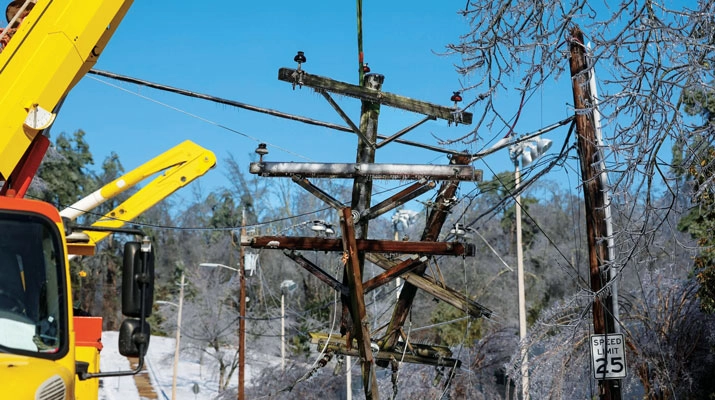
▶ Warm in the West
While the cold weather in the East had some industry members conjuring up memories of the polar vortex winter of 2013-14, those in the West were wondering what all the hubbub from their propane peers was about.
That’s because Oregon, Nevada, Arizona, Utah, Wyoming, Colorado, New Mexico, Texas and Oklahoma all had their warmest meteorological winters on record, measuring from December through February, according to the National Oceanic and Atmospheric Administration’s National Centers for Environmental Information, which has records back to 1895, AccuWeather reported. Montana, Idaho, California, Nebraska and Kansas had their second-warmest winters on record.
“It’s been untraditionally warm – not a lot of snow, and the degree-days are way off from average,” says Clark of the RMPA, composed of Idaho, Montana, Utah and Wyoming. He also oversees Colorado and New Mexico.
Clark says the ski industry, with snowpack measurements and customer counts, is a good barometer of winter weather conditions.
“Those resorts are saying it hasn’t been this warm since ’77,” he says. “Some resorts didn’t get to open at all this year. The local lake by my house [north of Salt Lake City] is usually frozen by Christmas. It didn’t freeze at all. They were still letting boaters on the lake in the middle of February.”
You May Also Like
-
Aaron Huizenga on leadership standards
Apr 12, 2026 -
How the LP Gas Buyers Guide has evolved since 1944
Apr 11, 2026



About the Author: Brian Richesson
Brian Richesson is the editor in chief of LP Gas Magazine. Contact him at brichesson@northcoastmedia.net or 216-706-3748.


Subscribe to LP Gas
If you enjoyed this article, subscribe to LP Gas to receive more articles just like it.