


Feast or famine: A winter of extremes for propane marketers
Clark, however, wasn’t hearing many complaints from his members about lagging gallon sales. Most members must have the mindset, he reasons, that one can’t change the weather.
“Participation is still there,” he says on March 11 while driving in Denver on a 70-degree day. “I don’t see anybody pulling back from being involved in my side of the industry.”
Farther to the west, in California, “It’s been interesting,” says Colin Sueyres, president and CEO of the Western Propane Gas Association.
“It’s definitely been milder than we’ve seen over the last several years, generally, but we have had several significant storm events,” he adds. “You’ve seen spikes in massive demand and then sort of a leveling off and not anything you would consider a nice, generally cold, high-heating environment throughout the entirety of the winter.”
In the past three to four years, Sueyres says, industry members in the West have invested in new bulk storage, rail terminals and distribution hubs to better control their product needs during high-demand periods and amid refinery closures. The added storage has also helped the industry supply California’s power needs during electric grid outages.
“We had a lot of spiked demand for power generation during [the storm events] as well because there were massive outages throughout California,” Sueyres says. “Folks were drawing not just for space and water heating and cooking, but also for primary electric power.”
▶ Fern spares few
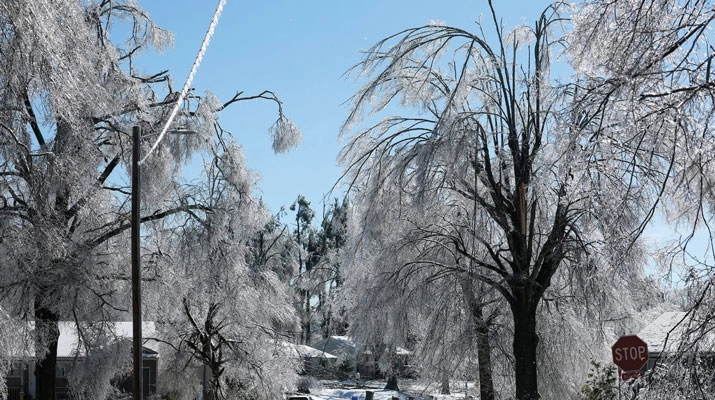
From the southern Plains to the eastern United States, Winter Storm Fern impacted nearly 70 percent of the country in late January with heavy snow, sleet and freezing rain. Some states also experienced dangerously cold temperatures.
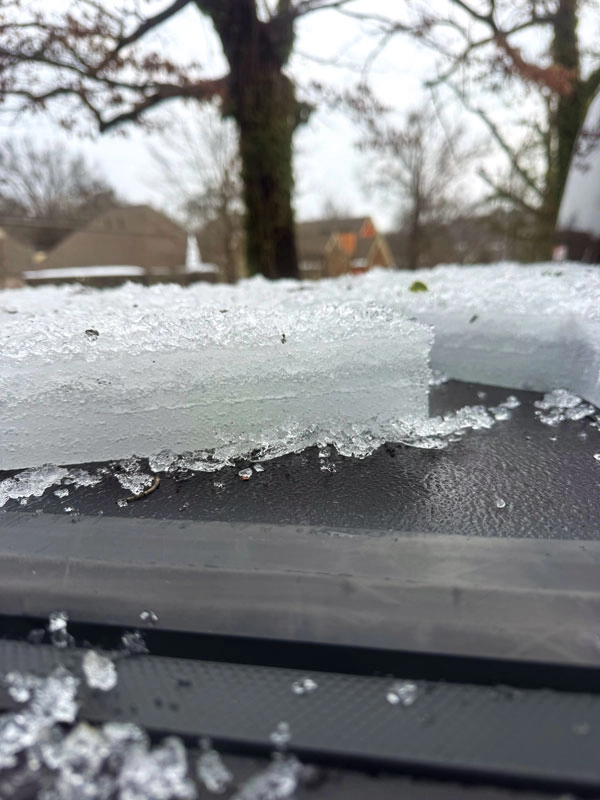
The storm left a mess in northern Mississippi, where ice accumulations of up to 4 in. knocked out power for weeks for some. More than 150,000 Mississippi residents lost power when Fern hit, the state reported.
Warner Jones of Harper Industries, who lives in Oxford, Mississippi, with his wife, Jessica Jones of Coombs Gas, described the severe weather conditions to LP Gas, but he also shared a story of propane industry unity.
“It looked like a hurricane of ice hit northern Mississippi,” he says.
The Southeast Propane Alliance (SEPA), composed of North Carolina, South Carolina and Georgia, raised funds and collected donations to help communities in Mississippi, all while dealing with the challenging weather conditions of their own.
SEPA coordinated with Payne Oil Co., Stringer Oil & LP Gas and others to make the 22-hour roundtrip drive and deliver the donations and supplies to hard-hit communities.
“They never thought twice about it,” Warner Jones says of SEPA, recognizing John Jessup and John Peña of the alliance and Reagan Bonnette of Stringer Oil & LP Gas in South Carolina, among others. “It was immediately, ‘What can we do to help?’”
In 2024, the industry rallied to help those in North Carolina after Hurricane Helene flooded the region. Many of those same industry members returned the favor in Mississippi.
▶ Obstacles, other circumstances
The winter wasn’t without its obstacles, as each heating season offers lessons to learn for propane marketers and the entire industry.
In February, Massachusetts’ attorney general called for changes after customer complaints of runouts, delayed deliveries or unresolved issues involving a couple of marketers surfaced in the media.
Anderson of PGANE says she was left answering calls from legislators, energy office personnel, attorneys and consumer protection folks, all trying to help people who ran out of propane or thought they were close to running out after their calls to the companies went unanswered.
“The majority of members did fantastic; the people that were properly contracted, that had adequate staffing, did very well this winter,” Anderson says. “But unfortunately, we had several members that were a little short on staffing and a little short on supply, and that caused some negative press for us.”
Also in February, a 41-car freight train carrying propane and other products derailed in Mansfield, Connecticut, sending several cars into a nearby river. None of the propane cars leaked, and no injuries were reported.
Early in the winter, the industry faced two incidents – about a week apart in November – that disrupted supply in two regions of the country.
At the Marcus Hook terminal in Pennsylvania, an electric transformer issue disabled the propane truck-loading rack for several days and left lingering problems. Soon after that, the east leg of the Mid-America Pipeline in Kansas experienced a disruption that impacted propane supply in the Upper Midwest. The Federal Motor Carrier Safety Administration issued a regional HOS waiver after each incident.
And as the winter was winding down, the United States and Israel launched attacks on Iran in a geopolitical event that impacted global energy markets.
Related Articles
Help arrives for Mississippi communities after Winter Storm Fern
You May Also Like
-
Aaron Huizenga on leadership standards
Apr 12, 2026 -
How the LP Gas Buyers Guide has evolved since 1944
Apr 11, 2026



About the Author: Brian Richesson
Brian Richesson is the editor in chief of LP Gas Magazine. Contact him at brichesson@northcoastmedia.net or 216-706-3748.


Subscribe to LP Gas
If you enjoyed this article, subscribe to LP Gas to receive more articles just like it.