


Keeping propane autogas dispensers running, a maintenance schedule for marketers
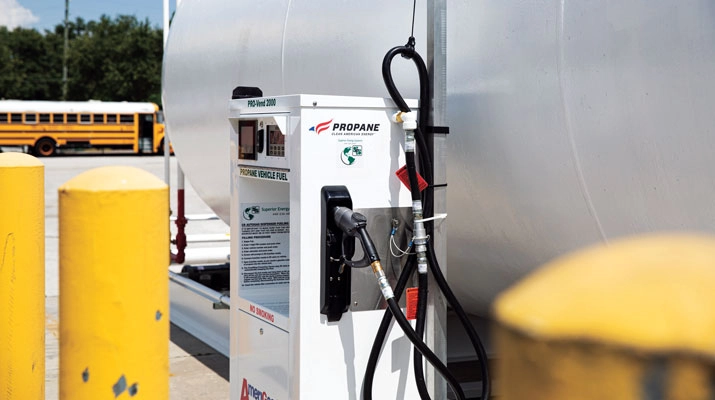
Propane autogas fueling dispensers are a boon for school bus, paratransit bus and work truck fleet operators that have migrated to this low-emission, low-cost fuel in place of expensive gasoline or diesel.

Dispensers can be as durable as they are easy to use, but like any machine, they require maintenance to ensure safe and reliable operation over the long haul. Therefore, it’s incumbent upon propane marketers to make sure proper maintenance is completed in a timely manner for a customer’s dispensers and related skid package.
▶ Dispenser maintenance
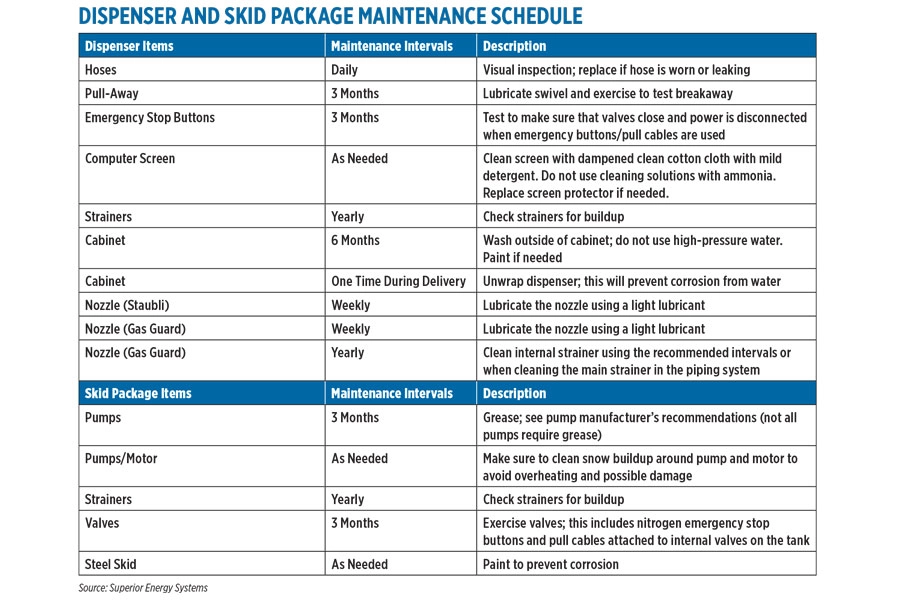
Dispenser maintenance is best viewed through the lens of increments – daily, weekly, monthly, annually, etc. For example, daily maintenance consists of visual inspection of the hose or hoses (in dual-hose models) to verify they are not worn or leaking.
Weekly maintenance should consist of lubrication of the nozzle with a light lubricant. Clean the screen as needed with a cotton cloth and mild detergent – but do not use ammonia-based cleaning solutions.
Every three months, the swivel should be lubricated and exercised to test breakaway, while emergency stop buttons should also be tested to ensure valves close and power is disconnected in the event emergency buttons or pull cables are used.
Every six months, the cabinet exterior should be washed, but don’t use a high-pressure washer. Paint if necessary. Another important step: Unwrap the cabinet upon arrival to prevent water corrosion.
Strainers should be checked for buildup annually. A nozzle’s internal strainer should also be cleaned at the same time.
▶ Skid package maintenance
Maintenance of the skid package is a little different. Every three months, the pumps should be greased based on the manufacturer’s recommendations; be advised that not all pumps require grease. Valves should also be exercised, including the nitrogen emergency stop buttons and pull cables attached to the tank’s internal valves.
Strainers should be checked annually for buildup. Clean up snow around the pump and motor to avoid overheating as necessary, along with painting the steel skid to prevent corrosion.
▶ Being proactive
Being proactive with preventative maintenance will play a major role in ensuring a dispenser and skid package will run without incident indefinitely. Many times, customers only call when things go awry, so a preventative maintenance approach can also alleviate costs that come with replacing parts, for example. All that adds up over time.
Thus, think of regular maintenance as a value-added service that will keep customers happy year over year. With that approach, word can spread fast to other potential customers, which will lead to gallon growth.
Derek Rimko is vice president of operations for Superior Energy Systems, based in the Cleveland area. He has served the propane industry for over 24 years and has been with the company since its inception.
Related articles
Fuel-price spread sharpens business case for propane autogas
Optimus Group operates propane fueling hub to serve growing commercial fleets
You May Also Like
-
Rinnai’s SENSEI RX Series tankless water heaters
Oct 13, 2026 -
Liquid Gas Week 2026 launches in Istanbul
Oct 12, 2026




Subscribe to LP Gas
If you enjoyed this article, subscribe to LP Gas to receive more articles just like it.