


Training the next generation: SEPATEC’s five-year workforce mission
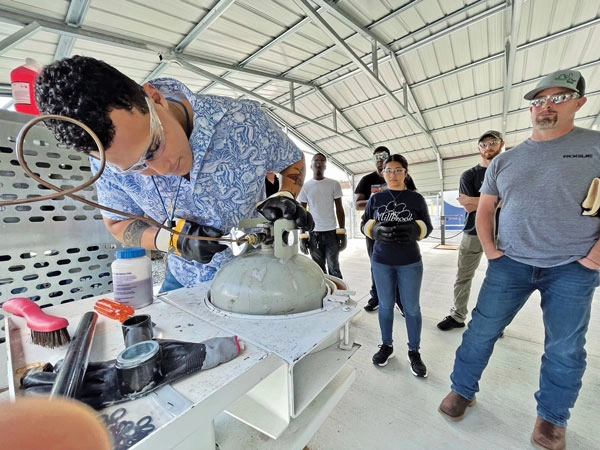
“We follow the curriculum right to the T,” Peña says. “Our curriculum is derived from the national Propane Education & Research Council.”
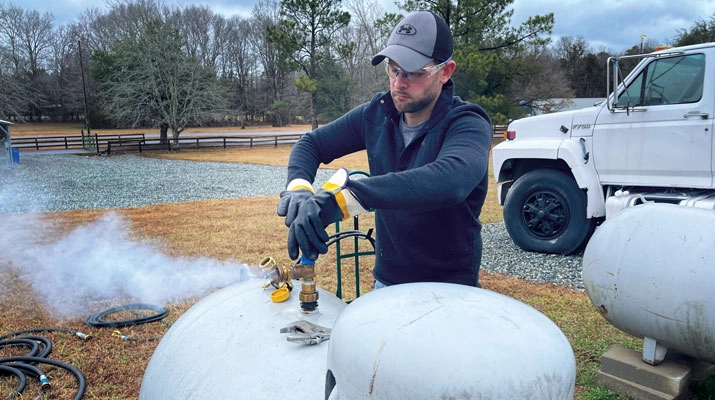
To reduce unnecessary risk during training exercises, many systems inside the building operate on compressed air rather than live propane.
“Instead of piping propane into the building, we have air, so all of the regulators and all of the lines that come in have air only,” Peña says. “There’s only one time that propane is actually introduced inside of this building, and that’s when the students are under the careful watch of the instructor.”
The commitment to safety and professionalism remains one of SEPATEC’s defining principles.
“At SEPATEC, we like to say we ‘do it by the book,’” Jessup says. “We do not teach shortcuts or bad habits. From day one, John Peña and the SEPATEC staff emphasize professionalism, safety and doing the job the right way.”
▶ Workforce shortage
Five years after opening, the need for trained propane employees remains significant.
“The problem is huge,” Peña says. “If I receive 15 to 20 phone calls a day here in my office, I’d say 60 to 65 percent of those are probably marketers and dealers looking for their next hire.”
Even with multiple training sessions each year, demand continues to exceed supply.
“We can’t produce enough students out of here to help meet the demands of what our industry needs,” Peña says.
That challenge has helped to shape SEPATEC’s continued evolution.
“The first class was back in April of 2021,” Peña says. “Since then, the school has evolved, and the strategy for the school has definitely changed over time and in different courses that we offer now.”
One of the center’s major additions has been its entry-level driver training program, developed in partnership with the National Propane Gas Association.
“We partnered with them to be able to provide entry-level driver training here,” Peña says.
The program is integrated directly into the early portion of the curriculum so students can quickly move into field-ready positions.
“We were able to apply the entry-level driver training program in conjunction with our first two weeks of classes,” Peña says. “It’s a complete three-week package that we’re able to provide to send people back out into the industry and delivering propane as quickly and safely as possible.”
SEPATEC draws students from a wide range of backgrounds, including military veterans, civilians entering the trades and workers recruited directly by propane companies.
The school works with individuals entering the industry independently and employees recruited directly by propane companies.
“Companies have gone out and recruited for themselves and then send them out to us for professional training,” Peña says.
The school now serves students well beyond the Southeast.
“We provide all of our three states in the membership their quality training, not just only those three states, but any state,” Peña says. “We’ve had students from as far as New York.”
You May Also Like
-
Faces & Places: October 2026
Oct 19, 2026 -

2026 LP Gas Growth Summit: What attendees are saying
Oct 17, 2026



Subscribe to LP Gas
If you enjoyed this article, subscribe to LP Gas to receive more articles just like it.