

Training the next generation: SEPATEC’s five-year workforce mission
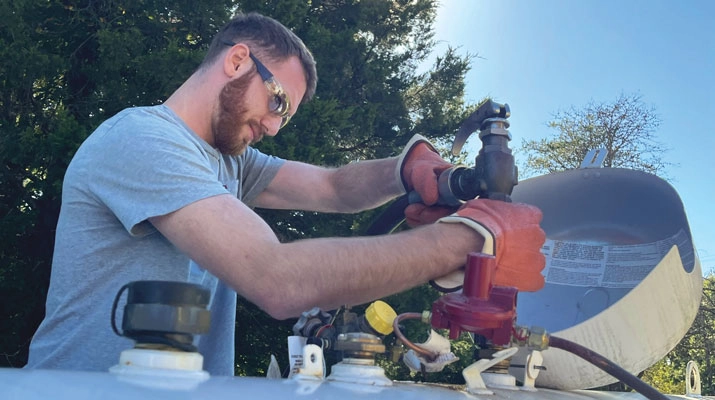
As propane marketers across the Southeast continue to grapple with labor shortages, an aging workforce and growing demands for technical and safety training, one North Carolina facility has quietly become a critical pipeline for the industry’s future.
The Southeast Propane Alliance Technical Education Center (SEPATEC), celebrating its fifth anniversary in 2026, has trained students through a combination of classroom instruction, hands-on learning and industry-driven workforce development designed to get technicians and drivers field-ready faster.
“We cannot grow the propane industry without a trained workforce,” says John Jessup, president and CEO of the Southeast Propane Alliance. “SEPATEC was created to bring new blood into the industry by recruiting and properly training individuals before connecting them with career opportunities throughout North Carolina, South Carolina and Georgia.”
The facility officially welcomed its first class in April 2021, but the idea began years earlier when leaders within the former North Carolina Propane Gas Association started discussing how to address inconsistent workforce training across the industry.
“The board members, they all came together and thought about building the first institution in the United States to help effectively train members already working in propane, but also new members as well, and to have a pipeline into North Carolina, professionally train them, certify them and get them working out in the field,” says John Peña, education director for SEPATEC.
At the heart of the issue was a training system that often relied entirely on informal instruction.
“In this industry, when someone got hired, they got trained by someone that was trained by someone else that was trained by someone else,” Peña says. “And it’s just kind of evolved.”
While that approach created experienced workers, it also created inconsistencies in training, safety procedures and code compliance.
“A big gap was a lack of training,” Peña says. “The big thing that I learned by coming into the industry was more on the lack of structural training and then also certification.”
According to Peña, SEPATEC was designed to help standardize that process.
“North Carolina took the lead on developing a school to help flatten those training lines and make sure that we met code and compliance regulations, policies and procedures,” he says.
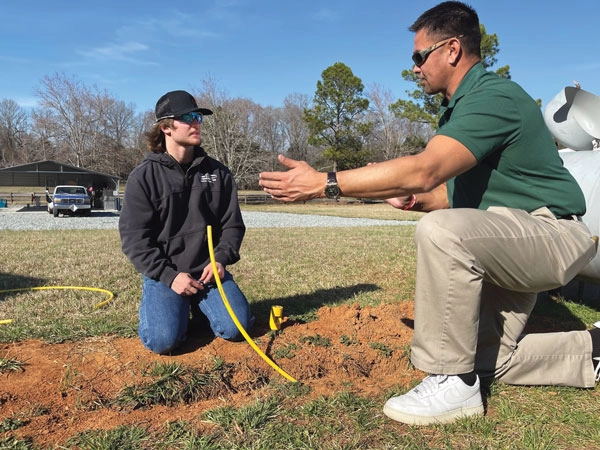
▶ Hands-on learning
Located in Graham, North Carolina, the SEPATEC campus was specifically designed to provide classroom instruction and practical training in a controlled environment. The facility includes formal classrooms, regulator labs, appliance training areas, cylinder filling stations, bulk plant equipment and an outdoor “propane village” where students can work with systems in real-world scenarios.
“The hands-on is what’s unique and what’s important,” Peña says.
The center’s eight-week training program combines classroom learning with repetitive skills practice and evaluations designed to prepare students for work in the field.
“About 60 to 65 percent of the time here at the school is spent in a formal classroom setting receiving professional platform instruction,” Peña says. “About another 30 percent of that is all hands-on training under the careful watch of the instructors.”
Students train in propane fundamentals, bobtail delivery operations, cylinder delivery operations, vapor distribution systems, appliance operations and plant operations.
“We allow the student to do it repetitively over and over again until they feel comfortable being able to do it,” Peña says.
The school places heavy emphasis on giving students practical experience before they begin working for propane marketers.
“What better way of doing it than being able to do it here in a controlled and safe environment before students actually go out and apply it out in the field,” Peña says.
That focus on safety extends into the facility design itself.
You May Also Like
-
Faces & Places: October 2026
Oct 19, 2026 -

2026 LP Gas Growth Summit: What attendees are saying
Oct 17, 2026




Subscribe to LP Gas
If you enjoyed this article, subscribe to LP Gas to receive more articles just like it.