

Why propane tractors could finally make a comeback
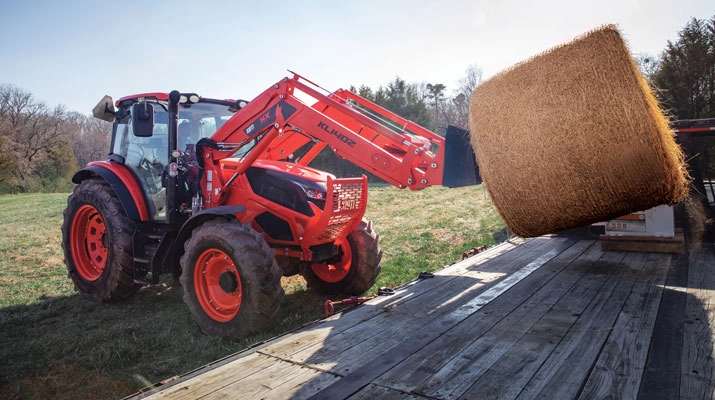
The last time an original equipment manufacturer sold a propane-powered tractor in North America, Gerald Ford was president.
But that’s about to change. More than five decades later, the propane industry is betting that the timing may finally be right for a comeback.
In April, the Propane Education & Research Council (PERC) approved a new development project that seeks to deliver two propane-powered tractor demonstration units and evaluate them through a year-long field trial. The effort brings together PERC, Southwest Research Institute (SwRI) and tractor manufacturer Daedong, whose Kioti brand has become a significant player in the North American tractor market.
If successful, the project could eventually lead to commercially available propane-powered tractors in the 100-140 horsepower range, one of the largest tractor segments in the United States.
For propane marketers, the initiative represents more than a new engine platform. It could create a significant new opportunity while expanding propane’s role in agriculture and commercial fleet applications.
▶ Why now?
Propane-powered tractors are not a new idea. Michael Newland, director of agriculture business development at PERC, notes propane tractors were commonly available from OEMs through the 1960s and early 1970s, with the last new OEM propane tractor sold in 1974.
“They became popular largely because of fuel costs,” Newland says. “Back in that era, propane made a lot of sense economically.”
Over time, however, diesel technology improved dramatically. Diesel engines offered exceptional power density and fuel efficiency, while environmental regulations remained relatively limited compared with today’s requirements.
“Diesel came on the scene, and it was a very energy-dense fuel,” Newland says. “At that point in time, diesel tractors didn’t have to meet the stringent requirements they do today.”
Today’s diesel engines face a much different environment. Emissions-control systems, diesel exhaust fluid requirements and increasingly sophisticated sensors have added complexity to modern equipment.
Those changes have helped create a new opportunity for propane.
“I think the timing is right for the project,” Newland says. “When you look at total cost of ownership, emissions requirements and some of the complexity associated with diesel equipment today, there’s an opportunity for propane to compete.”
Just as important, propane engine technology has evolved considerably.
“We’ve found that if developed correctly and with the right calibrations, we can produce very similar horsepower on propane as we can on diesel,” Newland says.
▶ Familiarity with propane
One reason PERC believes the opportunity is compelling is that agriculture already represents one of propane’s strongest markets. After all, across the country, hundreds of thousands of farms already use propane for grain drying, irrigation engines, heating and other applications.
“We’ve got more than 800,000 farms that already have our fuel on-site,” Newland says. “That’s a unique opportunity because we’re not trying to introduce both a new fuel and new equipment at the same time.”
The hope is that the industry can build on existing propane infrastructure and familiarity.
The project is targeting tractors in the 100-140 horsepower segment, which Newland says represents the largest tractor category in the U.S. market.
While agricultural operations are an obvious target, the project also has another market squarely in its sights: roadside mowing fleets. One of the demonstration units is expected to be tested in roadside mowing applications, where centralized fueling and fleet-based operations may help accelerate adoption.
“We think it’s a very good fit,” Newland says. “Those tend to be fleet scenarios, whether they’re private fleets or public fleets.”
Because roadside mowing operations often deploy multiple tractors from a central location, they offer similarities to the successful propane autogas fleet model.
“We’ve got a great total-cost-of-ownership message for both agriculture and commercial mowing,” Newland says.
▶ Converting diesel to propane
At the center of the project is a significant engineering challenge. SwRI will lead development efforts, converting a Tier 4 Final diesel platform into a propane-powered spark-ignition engine while maintaining the performance expectations operators demand.
Chris Bitsis, assistant director of research and innovation in SwRI’s powertrain systems engineering division, notes achieving diesel-like performance begins with overcoming one major technical hurdle.
“The most significant challenge in transitioning from diesel to spark ignition is managing engine knock,” Bitsis says. “Avoiding knock, particularly at low-speed and higher loads, is critical to achieving diesel-like torque and power.”
Fortunately, SwRI enters the project with extensive experience in advanced engine development.
The organization has developed sophisticated modeling and simulation tools through its high-efficiency gasoline engine consortium and recently demonstrated diesel-like propane performance on a 75-horsepower engine platform.
That previous work provides confidence that the concept can be successfully scaled into the 100-140 horsepower range.
Durability presents another issue.
“The elevated exhaust temperatures from stoichiometric combustion will be a challenge,” Bitsis says.
To address that concern, engineers are drawing from proven gasoline-engine technologies and materials, particularly in high-temperature components such as exhaust valves and turbocharger housings.
A dedicated durability testing phase will evaluate long-term reliability before the tractors enter field demonstrations.
You May Also Like
-
Faces & Places: October 2026
Oct 19, 2026 -

2026 LP Gas Growth Summit: What attendees are saying
Oct 17, 2026




Subscribe to LP Gas
If you enjoyed this article, subscribe to LP Gas to receive more articles just like it.