


El Niño in play for the 2026-27 winter
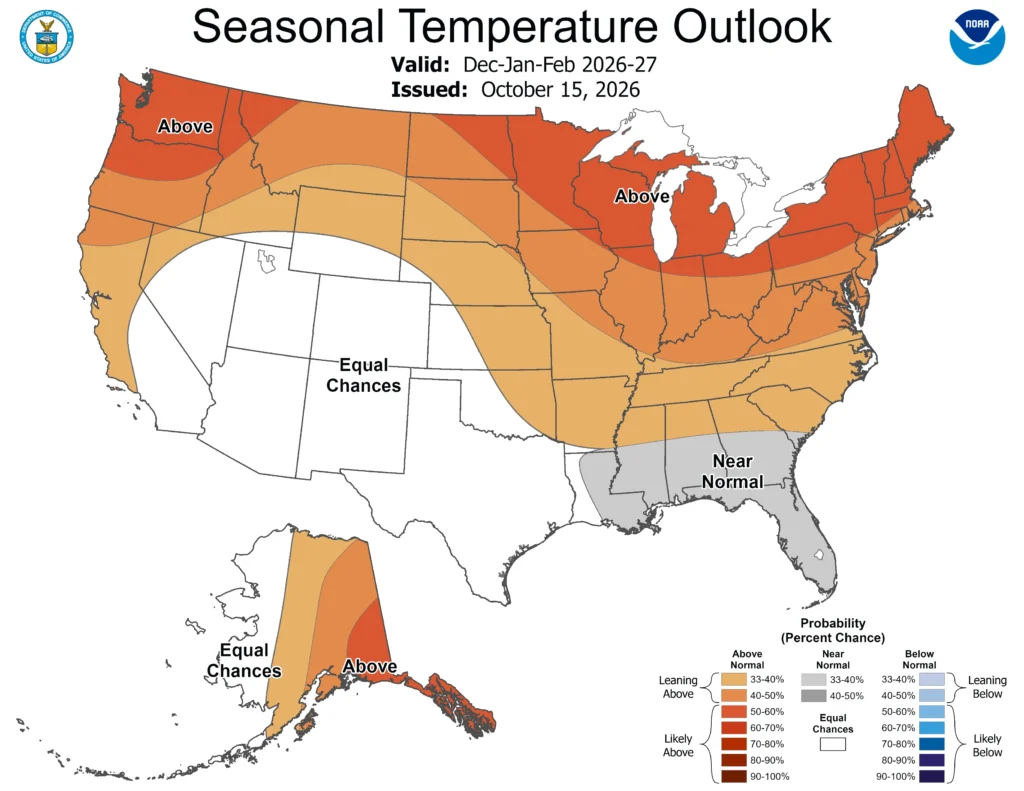
By now, you’ve almost certainly heard about the strong El Niño weather pattern predicted for this winter. It’s been the key element in several winter outlooks released in October.
An El Niño produces warmer waters in the Pacific Ocean, often leading to dryer and warmer conditions in the northern United States and Canada, with a stronger southern storm track leading to wetter conditions across the southern United States and along the Eastern Seaboard. So just how El Niño will impact your retail propane operation this winter depends on your location.
According to AccuWeather, this year’s El Niño has the potential to be the strongest on record, and its effects are often amplified during the winter months.
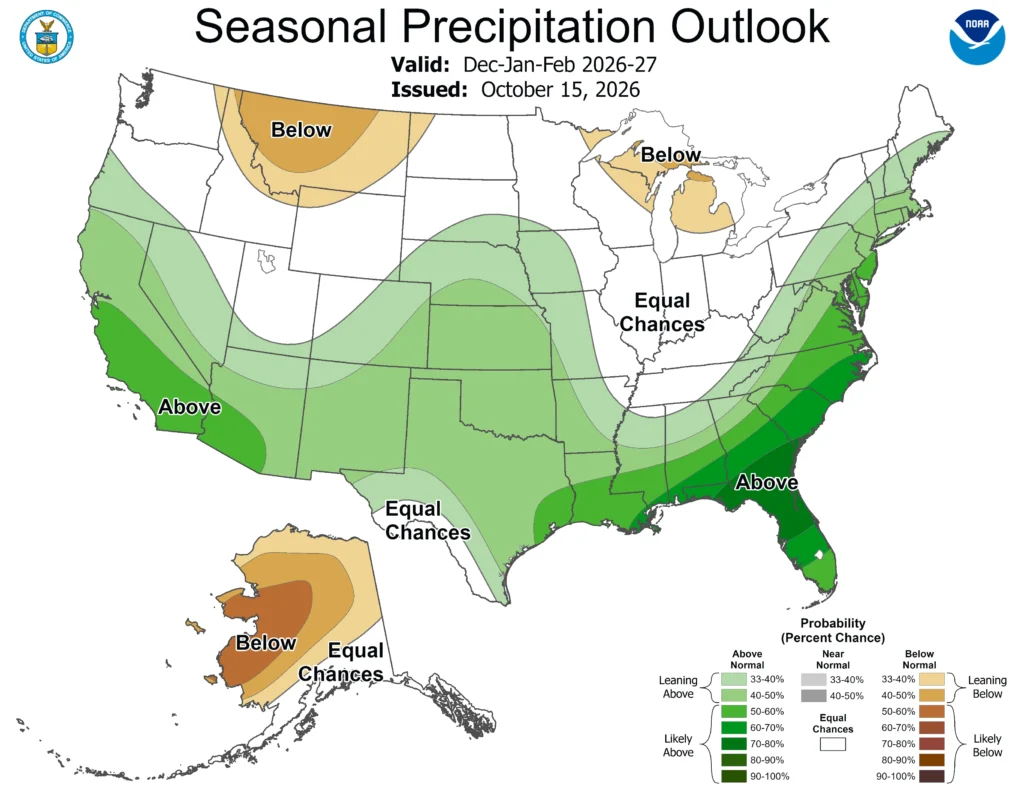
Areas that received a lot of snow last winter could miss out on those same totals this winter, says AccuWeather, citing Boston as a prime example. The city received nearly 63 in. of snow last winter but is forecast to get only 15-30 in. this winter.
That is due in part to expected above-normal temperatures this winter, AccuWeather adds, with more persistent cold spells in parts of the Southwest and south-central Plains, and occasionally reaching the Gulf Coast.
The agency is also predicting less lake effect snow around the Great Lakes, especially in early winter; several atmospheric rivers in California; and conditions that should improve the snowpack out west after record-low amounts in 2025-26.
Communities in drought-afflicted areas that receive high rain and snow totals on dry soil should be aware of potential flash floods and mudslides, the National Oceanic and Atmospheric Administration cautions.
Even with El Niño in play this winter, AccuWeather notes, the pattern can fluctuate throughout the season, changing predicted storm tracks, snowfall and temperatures.
Propane household expenditures
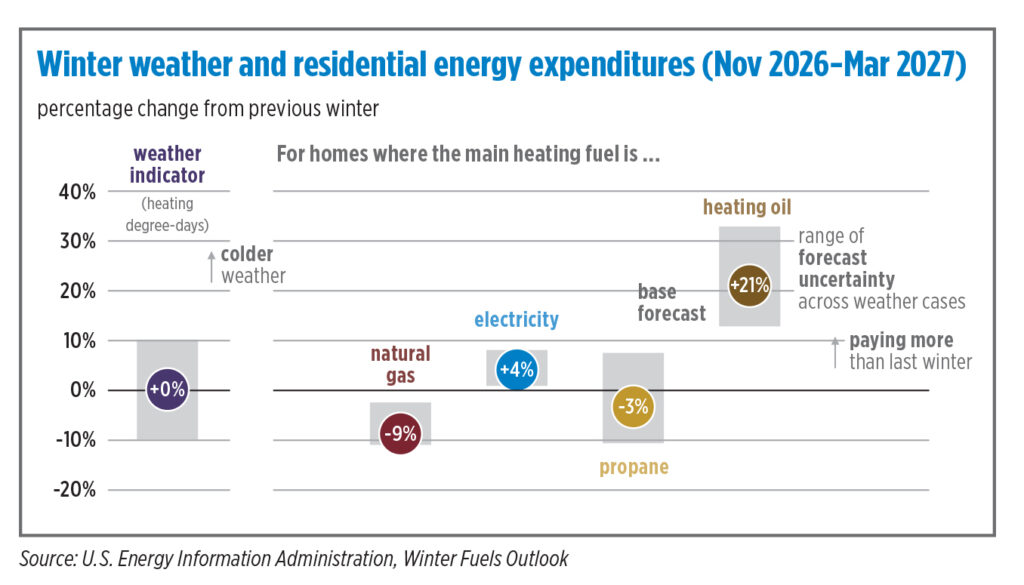
In case you missed it, homeowners keeping warm this winter by fueling their heating systems with propane or natural gas will have lower energy expenditures compared to last winter, according to the U.S. Energy Information Administration (EIA).
Owing primarily to lower fuel costs, these propane- and natural gas-fueled households – numbering about half of all U.S. households – will pay 3 percent and 9 percent less, respectively, under EIA’s base forecast this winter compared to last winter. Households using electricity or heating oil will pay more – up 4 percent and 21 percent, respectively, due to higher prices for those energy sources, EIA reports. The large jump up in heating oil expenditures is the result of increasing global crude oil and distillate prices that have taken hold during the U.S.-Iran war.
While expenditures for propane are expected to be slightly lower this year, with U.S. households paying $1,246 on average from November to March, those in the Northeast will see a significant drop (of 15 percent) compared to the previous winter. This drop is driven by decreasing consumption and lower prices after a record winter in parts of the region, the EIA says. Households in the Northeast are expected to pay $1,687 on average this winter.
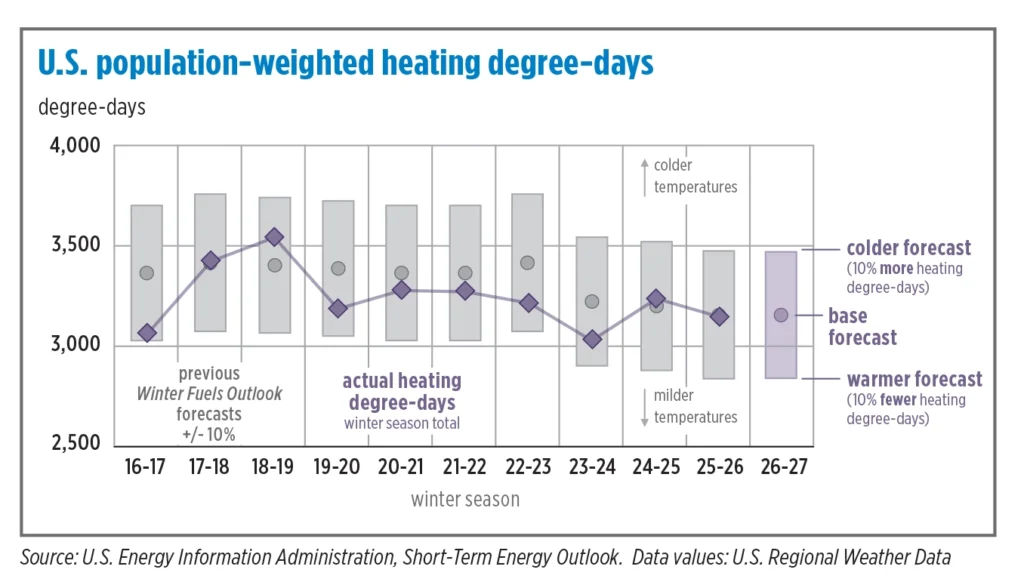
While the EIA expects national average temperatures to be similar to last winter, its forecast assumes warmer temperatures in the Northeast after a cold 2025-26 winter and much colder temperatures in the West following a warm winter. It expects temperatures in the Midwest and South to be similar to last winter.
EIA says El Niño could lead to large temperature variations from its forecast.
Related Articles
Industry leaders share what the propane industry can learn from winter 2026
You May Also Like
-
Propane price spreads encourage exports
Oct 19, 2026 -
Propane prices, valuation shifting
Oct 12, 2026





Subscribe to LP Gas
If you enjoyed this article, subscribe to LP Gas to receive more articles just like it.