

AI in propane safety regulatory intelligence
The propane industry operates within a complex regulatory environment involving the Occupational Safety and Health Administration, the Department of Transportation, the Environmental Protection Agency, state agencies, NFPA standards and more.

As compliance requirements continue to evolve, artificial intelligence (AI) is becoming an increasingly valuable tool for safety regulatory compliance.
AI offers advantages in monitoring regulations, identifying risks and managing information. However, it also presents challenges and cannot replace the experience, judgment and accountability of qualified safety professionals. The greatest value comes from combining AI capabilities with safety professionals.
▶ Where AI helps
One of AI’s greatest strengths is monitoring large amounts of regulatory information. AI systems can continuously review agency websites, regulatory updates, enforcement bulletins, standards revisions and industry publications. This allows organizations to identify changes more quickly than traditional manual review processes and reduces the likelihood of missing important compliance requirements.
AI is also effective at analyzing large data sets to identify safety trends. Incident reports, near misses, inspection findings, maintenance records and employee observations often contain valuable insights that can be difficult to evaluate manually. AI can recognize recurring patterns and emerging risks that might otherwise go unnoticed. For example, it may identify increasing trends in equipment failures or inspection deficiencies, helping organizations take corrective action before incidents occur.
Another advantage is improved knowledge management. Propane companies maintain extensive collections of regulations, procedures, technical standards and training materials. AI-powered search tools allow employees to quickly locate relevant information using natural-language queries, improving efficiency and access to compliance-related knowledge.
AI can also assist with inspections and audits by identifying documentation gaps, tracking corrective actions and generating draft compliance checklists. These capabilities improve consistency and reduce administrative burden.
▶ Where AI can hurt
Despite its advantages, AI introduces risks when used without proper oversight. Regulations often contain language, exceptions and jurisdictional differences that require interpretation. AI may misunderstand regulatory intent or fail to consider operational context, resulting in incomplete or inaccurate recommendations.
A significant concern is AI hallucination, where the system generates information that appears credible but is incorrect. In a propane safety environment, AI may reference an outdated requirement, misstate a regulation or generate unsupported compliance guidance. If accepted without verification, these errors can lead to compliance violations or increased operational risk.
AI is also limited by the quality of the data it receives. Inaccurate inspection reports, incomplete incident records or outdated regulatory documents can produce flawed conclusions. Poor data quality can result in poor decision quality.
Organizations must also avoid overreliance on automation. Compliance and safety management require critical thinking, operational knowledge and professional judgment that cannot be fully replicated by algorithms.
▶ Where intervention remains essential
Professional expertise remains indispensable for regulatory interpretation, compliance decisions and incident investigations. Safety professionals understand operational realities, enforcement expectations and organizational context in ways AI cannot.
Incident investigations require interviews, observations, credibility assessments and evaluation of human factors. While AI can help organize information and identify trends, determining root causes and corrective actions remains a personal responsibility.
Professional judgment is equally important when making risk-based and ethical decisions. Evaluating risk acceptance, operational shutdowns or major corrective actions requires leadership and accountability beyond the capabilities of AI.
▶ Best practices for AI oversight
To maximize benefits while minimizing risk, propane organizations should establish a structured AI oversight program:
⦁ Verify AI-generated guidance.
⦁ Establish documented governance policies defining approved uses and accountability.
⦁ Conduct periodic audits of AI outputs.
⦁ Ensure AI systems rely on accurate and current data.
⦁ Document AI-assisted recommendations and retain records of human review.
⦁ Train employees on AI’s capabilities and limitations.
⦁ Use AI primarily for monitoring, analysis and information management rather than final safety decisions.
⦁ Continuously evaluate and improve AI oversight practices.
AI has the potential to significantly improve safety regulatory intelligence within the propane industry. However, its limitations make oversight essential.
The most successful organizations will adopt a person-in-the-loop approach, leveraging AI’s speed and analytical capabilities while relying on experienced safety professionals for interpretation, judgment and accountability.
Randy Warner is product safety manager for Cavagna North America. Reach him at randywarner@us.cavagnagroup.com.
NOTE: The opinions and viewpoints expressed herein are solely the author’s and should in no way be interpreted as those of LP Gas magazine or any of its staff members.
Featured homepage image: bluekite/E+/Getty Images
Related articles
National Safety Month highlights workplace safety priorities
You May Also Like
-
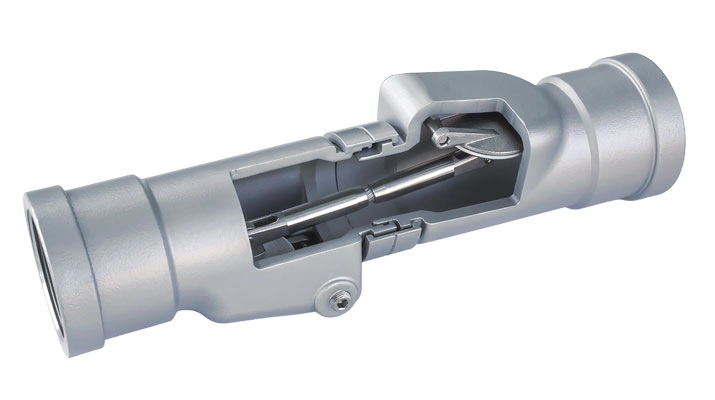
Smart-Hose Technologies’ LPG hose assembly
Oct 20, 2026 -

Faces & Places: October 2026
Oct 19, 2026 -

2026 LP Gas Growth Summit: What attendees are saying
Oct 17, 2026




Subscribe to LP Gas
If you enjoyed this article, subscribe to LP Gas to receive more articles just like it.