


Propane inventories break record high
Trader’s Corner, a weekly partnership with Cost Management Solutions, analyzes propane supply and pricing trends. This week, Mark Rachal, director of research and publications, crunches the numbers on the record-high propane inventories.
Catch up on last week’s Trader’s Corner here: Crude situation in Iran starting to improve
For the week ending Aug. 14, the Energy Information Administration reported in its Weekly Petroleum Status Report that U.S. propane inventories were at 107.013 million barrels. It was the highest U.S. propane inventory level ever. The previous high was 106.094 million barrels, reached during the last week of October 2025.
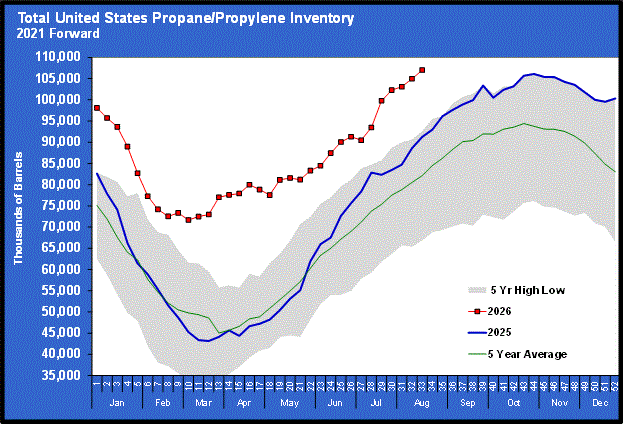
About six weeks into the U.S.-Iran war in March and April, foreign buyers started showing up on U.S. shores in search of more propane supply. The United States was already the world’s largest exporter of propane. But the war had disrupted supplies from the Middle East, the second-largest area of supply, putting pressure on buyers that would normally source supply from that region to look to the United States.
For several months, U.S. propane inventories were trending as if the large surplus of inventory over last year would be gone by the start of winter. The trend in inventory builds showed a likely intersection of this year’s inventory levels with last year’s somewhere around the end of September. In early July, there was a dip in propane inventories, which raised concerns about supply even more.
But immediately after that draw, there were a couple of above-average builds followed by several builds of average size that have put them at the record.
U.S. propane production has set new highs in just about every week of this year, with the exception of during the winter storm that disrupted oil and gas production.
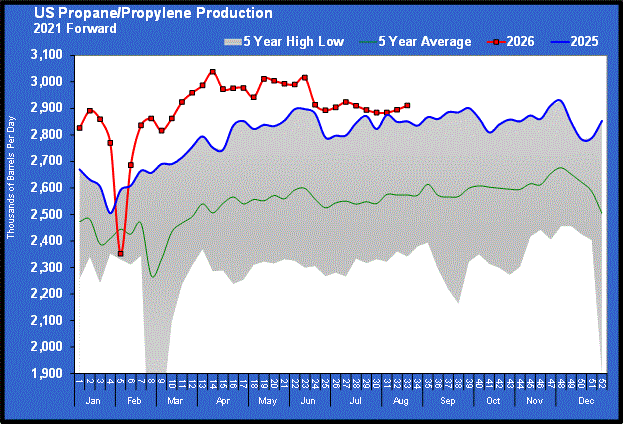
Even so, production is below the over-3 million barrels per day level set in April.
U.S. propane exports have been consistently high after bouncing up in April, but they leveled off after that April jump.
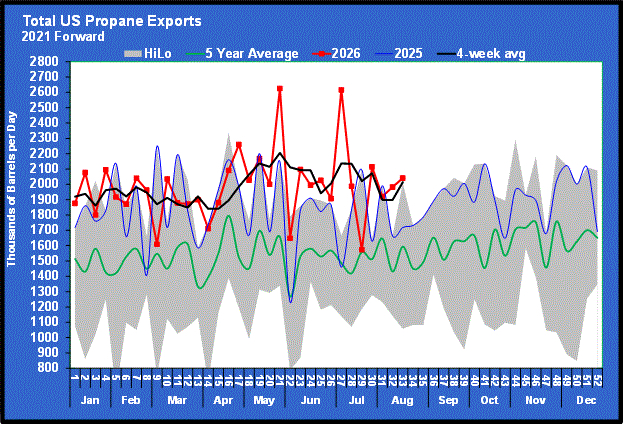
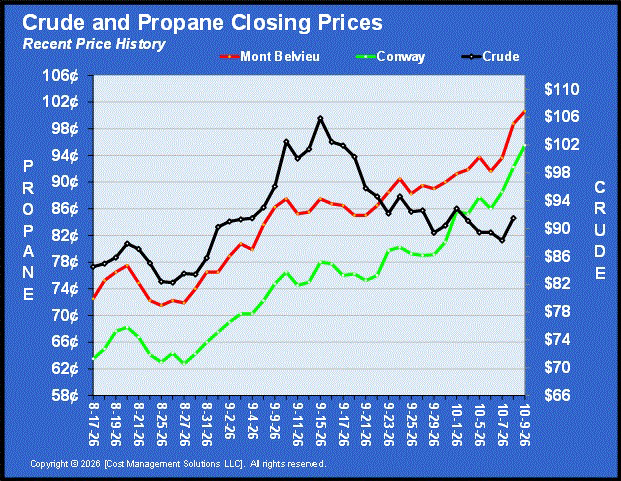
We suspect that is due to an export capacity restraint rather than a lack of demand. U.S. propane has certainly been priced to move. MB ENT propane, which is considered the benchmark price for exports, has been running about 3 cents below MB ETR, which might be considered the domestic propane benchmark.
The price spread between the United States and foreign markets would certainly encourage U.S. propane to flow to these markets if they are short of supply.
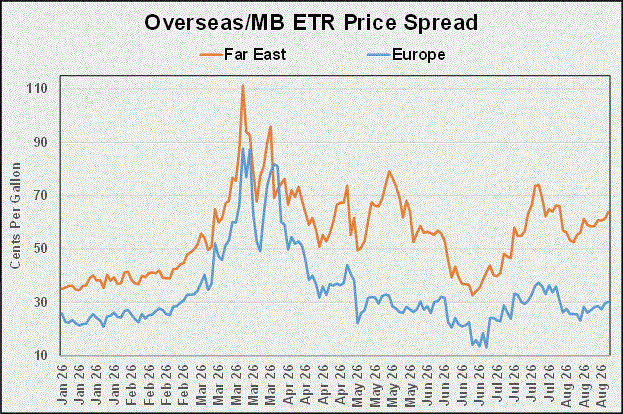
Shipping costs are high, but if the demand is there, prices will do what they must to make sure the propane moves.
There will be more U.S. propane export capacity coming online during the coming months, so we should see another tier up on the propane export chart when that occurs. But inventories are certainly in position to handle it. Plus, as the production chart shows, the United States has some slack on the production side as well to help offset more export demand.
If U.S. oil and gas producers keep drilling and increasing production, propane supply will keep growing as well. Once the new export capacity is online and when domestic winter heating demand kicks in, we could see some good draws on propane inventories that will tighten the supply/demand balance up some.
However, as we write, there are new reports coming out that Iran may be losing its grip on the Strait of Hormuz. The reports suggest that about half of the crude volume that had been going through the Strait of Hormuz is being moved at night through a corridor along the Omani coast under U.S. protection. We would assume that some LPG cargoes from Qatar will start moving as well if they haven’t already.
Hopefully the United States can continue to degrade Iran’s ability to threaten commercial shipping and escort a higher number of ships through. If that occurs, that could also take pressure off demand for U.S.-sourced energy. If that turns out to be the case, there could be fewer calls on U.S. supplies from foreign buyers as U.S. domestic demand increases this winter. Hopefully that will keep propane prices capped at a reasonable price.
Propane remains a good value, and at least for now, there is a very good chance that present conditions will keep it that way.
Charts courtesy of Cost Management Solutions.
To subscribe to LP Gas’ weekly Trader’s Corner e-newsletter, click here.
You May Also Like
-
Propane prices, valuation shifting
Oct 12, 2026






Subscribe to LP Gas
If you enjoyed this article, subscribe to LP Gas to receive more articles just like it.