

Why emotional intelligence matters in the modern propane workplace
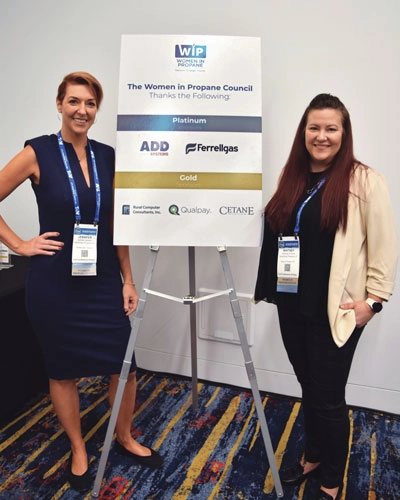
“Naturally, we are reactive to what is coming at us,” she adds. “But we work at removing the emotion, remaining objective and assertive while having empathy.”
Hershey-Jackson, who calls herself “a work in progress,” says the Agile EQ module has helped her not only to better understand herself but to identify areas that she can develop.
“The Agile EQ didn’t just focus on what I’m strong at. And it does not refer to the other traits as weaknesses, only as opportunities that may require more effort,” she says. “In other words, once you understand yourself, you can keep working toward improvement and better interactions.”
The module revealed that her predominant style is C, for conscientiousness, and naturally objective, systematic and analytical.
“The Agile EQ program was able to give me advice on how I come across to other styles. For instance, my cautious and analytical mindset, and tendency to overwhelm with details, might come across as lack of self-assurance or excitement about a project,” Hershey-Jackson says.
“The other part was on opportunities in areas I am not as strong in. I am not normally outgoing by nature,” she explains. “This program gave me advice on not only why it is important to focus energy in this direction, but actual steps, whether it be beginner, intermediate or advanced, depending on where you are in your personal journey.
“For me, personally, I feel these steps helped me to connect more with my co-workers in the safety training I conduct,” she adds. “It has also helped me be more confident in putting myself in front of larger groups of people, which I now do as the WIP ambassador to Pennsylvania.”
▶ Training to retain
Today’s employees are increasingly likely to jump ship if they do not feel valued in the workplace, Jackson says. They expect employers to provide a work-life balance.
“The generations that are coming in now are demanding,” she explains. “They want to be seen and heard, or they will move on. No one cares about being [seen as] a job hopper anymore.”
Dispersed workforces often mean co-workers must interact digitally and across telephone lines, which can make it difficult for them to connect and relate to one another. Highly evolved interpersonal skills and mentoring programs are increasingly important when co-workers can’t gather around the proverbial water cooler or hang out after work.
One way to counteract this challenge is to invest in training that develops the whole person, builds relationships and promotes a healthy work environment.
“One of the costliest things we do is onboard and train,” she says. “When people feel heard and respected, they stay. How many could be lost over a personality conflict that could’ve been resolved with training?”
As more propane companies are leaning into the DiSC training program, Jackson is preparing to expand into other countries. WINLPG, the global association of Women in Propane, has invited them to present at its 2027 gathering in Houston.
“We’re going to take this globally and see what we can do for these chapters in all these other countries,” Jackson says. “This is something that is valuable to every single person that is in our industry.”
Related articles
Mental health leadership in the propane industry
National Safety Month highlights workplace safety priorities
Addressing anxiety, stress and burnout in the propane industry
You May Also Like
-
TRIARC Tank introduces square shroud
Sep 19, 2026 -
Basin Coop acquires Inter-Mountain Propane
Sep 17, 2026 -

How to hire for safety in the propane industry
Sep 17, 2026



Subscribe to LP Gas
If you enjoyed this article, subscribe to LP Gas to receive more articles just like it.