


Propane tank refurbishment moves from cleanup job to fleet strategy for propane marketers
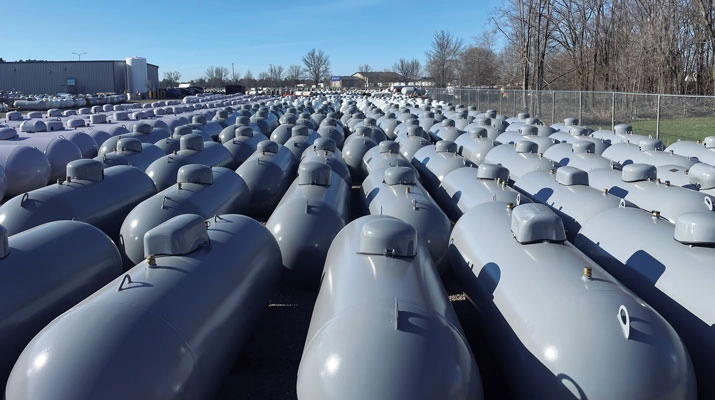
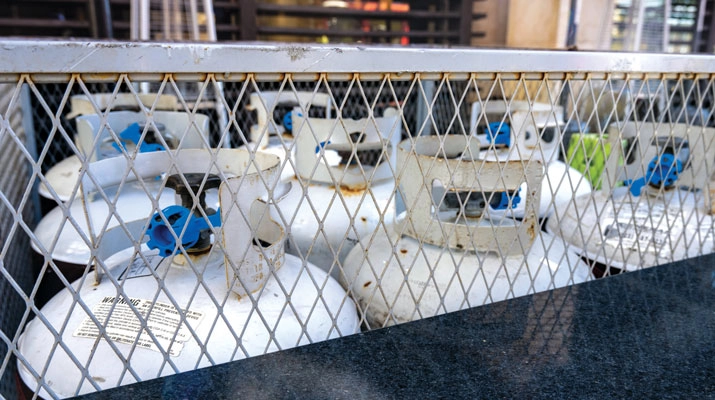
A propane tank sitting in a marketer’s yard can be a stranded asset or the answer to the next installation.
“They own the steel,” says Pete Morenus, director of business development for LP Cylinder Service. “It has intrinsic value for use.”
That realization has moved tank refurbishment from an occasional cleanup job into a fleet strategy. After all, higher costs for new tanks, acquisitions that leave marketers with mixed inventories and the need to put equipment back in the field are driving demand.
Today, more manufacturers are expanding refurbishment alongside new tank sales, giving customers more ways to manage an asset over its working life.
Refurbishment is no universal substitute for a new tank. A sound vessel, the right size for the next customer, available yard inventory and economical transportation all have to line up. The decision also changes with the season. A tank that can wait for spring processing may be a poor candidate when a marketer needs it installed before winter.
▶ The inventory behind demand
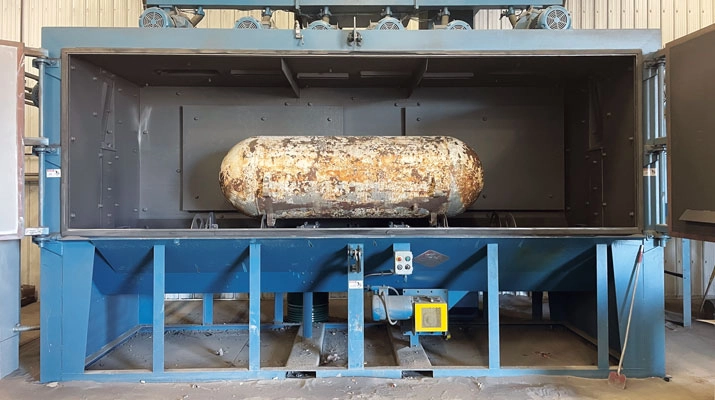
Steel, diesel and labor have pushed up the cost of new equipment, says Brian Zehentbauer, senior business director for heating and cooking products at Worthington Enterprises, which acquired Hydrostat’s tank distribution and refurbishment business in December 2025 after customers sought more help with their refurbishment programs.
“Refurbishing an existing tank can cost nearly half as much as buying a new one, although freight can materially change the result,” Zehentbauer says.
At TerraVest Tanks, the driver is often a business acquisition.
“As marketers acquire other companies, they take on a lot of tanks, and our larger customers are refurbishing what they have first and buying new second,” says John Hearn, vice president and general manager of TerraVest Tanks. “Marketers are finding fewer idle tanks in their yards, even as consolidation brings unfamiliar assets into newly combined fleets.”
According to Hearn, a marketer refurbishing a suitable tank it already owns pays about 30 percent of the price of a new tank through TerraVest, while a purchased refurbished tank is about 70 percent. Those are company estimates, not a blanket industry price, and they reflect different transactions. Freight, rejects, valves and the time a tank spends out of service belong in every comparison.
The price advantage is most compelling when the marketer already has the right vessel on hand. Buying someone else’s reconditioned inventory solves a different problem as it can add capacity without waiting for a custom new tank or taking a working tank out of service.
A tank of the wrong size can still tie up capital even after an inexpensive refurbishment. These choices work best as part of a planned inventory cycle, not as an emergency response to a customer installation.
The tank mix follows the market. Scott Eggers, regional sales manager for Quality Steel, says aboveground horizontal tanks dominate some Midwestern work, while vertical tanks serve other markets where site and housing costs shape installations.
“Some customers are upsizing tanks at homes to reduce deliveries,” Hearn says. “Others inherit sizes they would not choose for new installations. The useful question is whether a particular tank can serve a customer again quickly enough to justify the work. A marketer growing rapidly may need new tanks even while a separate batch of idle vessels moves through refurbishment.”
▶ What a refurbishment buys
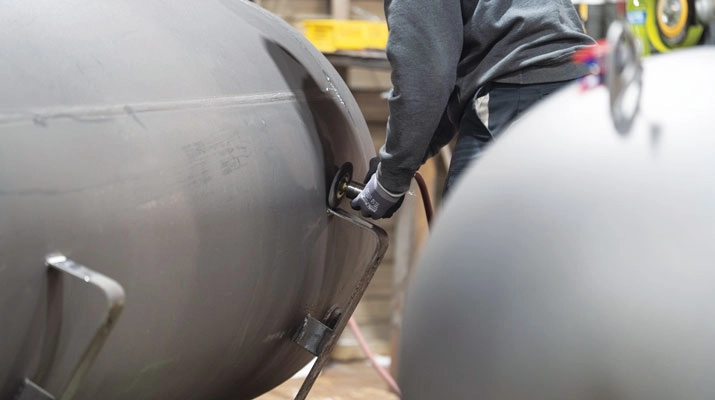
The work begins before the blast cabinet. Marketers and refurbishers screen the vessel, its identification and valve arrangement so they do not haul obvious scrap across the country. A readable data plate and acceptable condition matter more than a faded coating. Rust or pitting, leaks, cracks, severe dents, fire damage and obsolete configurations can end the job before it starts.
“Nothing gets coated over. We find defects first,” Hearn says. He explains TerraVest purges and disassembles a domestic tank, blasts it to bare metal and inspects it under applicable National Board inspection criteria. Its teams use ultrasonic testing where corrosion calls for a wall-thickness check. They can repair nonpressure parts such as legs, lugs and collars; a repair to the pressure boundary requires a different, code-controlled process and may cost enough to make a new tank the better purchase.
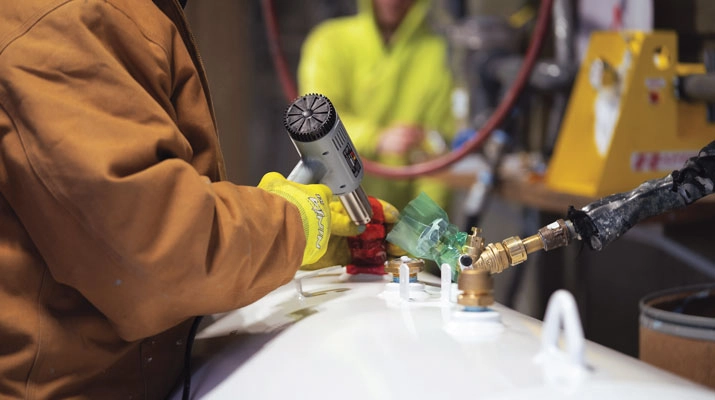
Acceptable tanks receive a new finish, valves and gauges and are prepared for return to service. TerraVest powder coats at Kaleva, Michigan, and Cowansville, Quebec, Canada, and applies a liquid finish at Jet Peinture.
TRIARC Tank uses automated blasting and liquid coating at its San Antonio operation. Worthington collects customer tanks, removes residual propane, inspects and documents rejects, then blasts, paints, revalves and returns those that pass.
Those steps are a useful checklist when comparing bids. A low coating price says little about how a shop identifies wall loss, handles residual product, documents a rejection or equips the finished tank. The rules and inspection work also differ by vessel type. Small DOT cylinders are subject to their own requalification requirements; domestic ASME tanks and large bulk tanks call for different procedures and equipment. Marketers should describe the actual vessels and service needed when asking for a quote.
“It really starts on the front end as a part of the conversation and quoting phase,” says Jared Wallace, senior vice president and general manager of TRIARC Tank. “Don’t send us leaking tanks or tanks that are pitted beyond use.”
TRIARC refurbishes 120- through 1,000-gallon horizontal ASME tanks and plans to add vertical tanks. Its work complements production of new tanks when a customer has both usable idle equipment and immediate installation needs.
Bulk storage demands another scale of work. Hiltz Propane Systems refurbishes large plant tanks, often 30,000-gallon vessels, and can make code-authorized alterations when a customer needs different openings.
Peyton Moody, vice president of sales and service, describes a full teardown, inspection of the vessel and welds, wall-thickness readings, testing and blasting before a tank is rebuilt for its next site. Code work requires the appropriate authorization and inspection; it is not simply a paint job.
Moody estimates a refurbished bulk tank can come in about 30 percent below a new one on an all-in basis. A particular new 30,000-gallon tank he discussed carried a 10- to 12-month lead time, making available used steel attractive to a project on a schedule. Hiltz’s indoor blasting facility has also shortened its own blasting step substantially. Those figures describe Hiltz’s circumstances, and a marketer still has to price transport, inspection, alterations and installation for its project.
You May Also Like





Subscribe to LP Gas
If you enjoyed this article, subscribe to LP Gas to receive more articles just like it.