


Strong run in propane prices
Trader’s Corner, a weekly partnership with Cost Management Solutions, analyzes propane supply and pricing trends. This week, Mark Rachal, director of research and publications, explains what’s driving the rise in propane prices.
Catch up on last week’s Trader’s Corner here: Propane inventories fall as summer ends
The Energy Information Administration reported a large build in U.S. propane inventories that overcame the 2-million-barrel drop we discussed last week. However, that has not prevented propane prices from moving sharply higher.
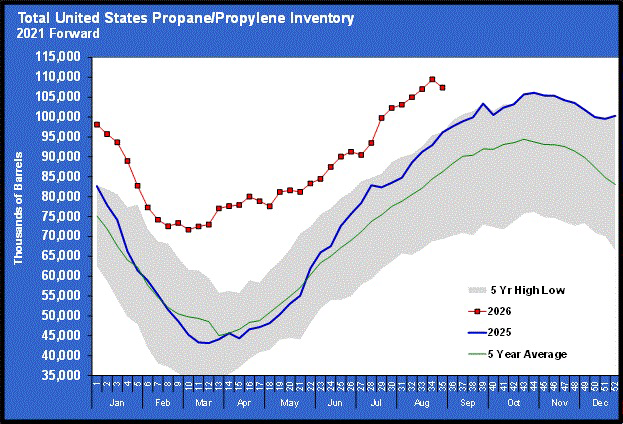
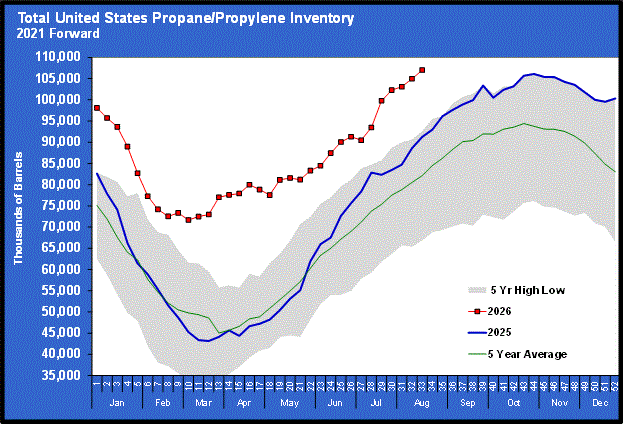
It may seem strange that propane prices are moving higher with inventories now at a record 110.47 million barrels. The fact that they are is a testament to the impact crude prices have on propane prices.
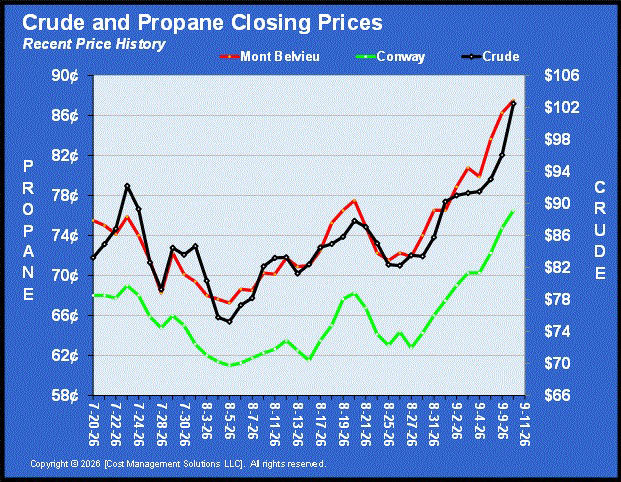
As Chart 1 shows, propane has largely followed crude up since talks between the United States and Iran broke down.
We have also seen a lot of propane trading volume during this run-up in prices, which we believe is driven by foreign buyers that are preparing for long-term disruptions to supplies from the Middle East.
There appeared to be relief from foreign demand when it looked like the United States had established a safe corridor for ships to use the Strait of Hormuz. But successful attacks on shipping by Iran have put the potential for significant and sustained volumes through that passageway in jeopardy.
Also, Iran-backed Houthi rebels out of Yemen, which already control most of the population centers in that country, have staged a highly successful offensive. They have taken coastal cities in Yemen, and the path is open for them to control a vital island in the Red Sea that could further threaten shipping.
The Houthi rebels have also attacked Saudi Arabia, disrupting refinery operations. We have seen reports of Saudi Arabia’s refined fuel exports running at 35 percent of normal. There are also reports that the nation’s crude production fell 2.3 million bpd in August to its lowest in 30 years. To make matters even more frightening, there are fresh reports that smoke has been seen rising from the East-West pipeline that Saudi Arabia has been using to move more of its production from exporting via the Persian Gulf to exporting via the Red Sea.
Saudi Arabia’s inability to defend itself from Houthi rebels has been remarkable and shocking. It has made little response to the Houthi offensive. Instead of using its military to aggressively push back on the Houthis, it has asked the United States to attack them. The United States refused.
Saudi Arabia exports LPG (propane/butane) from its port at Yanbu on the Red Sea. Yanbu is far enough north of the Saudi/Yemen border not to have been directly attacked to this point. Ships from there can go north through the Suez Canal to reach markets, but the increased shipping time to go around Africa to markets in the Far East is a logistical problem limiting how much supply can be moved. Normally, those ships would move south through the Bab el-Mandeb Strait, which cuts up to four weeks off the shipping time. Houthis have already limited shipping through Bab el-Mandeb, and the recent gains will only solidify their hold on it.
Given all of this, it is little wonder that foreign buyers would be reinvigorated to seek supply from the United States that would result in the increased trading volume that has been evident. There should be more U.S. export capacity coming online this year. There appears to be little doubt at this point that whatever capacity that is available will be used.
So, as surprising as rising propane seems with inventories so high, there is good reason for it. Propane prices have risen from 67.25 cents per gallon at MB ETR at the start of August to a close of 87.5 on Sept. 10 for a better than 20-cents-per-gallon gain. Conway has been rising as well and is now at 76.5 cents. That has propane prices above where they were at this time last year. On Sept. 11, 2025, MB ETR closed at 70.5 cents and Conway at 68 cents. Yet propane inventories are nearly 13 million barrels higher than at this point last year.
But this has been a crude-driven rally in propane for the most part. The possible increase in buying pressure from foreign users has made it easier for propane markets to follow crude up. The fact is that propane is reflecting its oversupply situation and its increase in inventories despite its price being higher than last year.
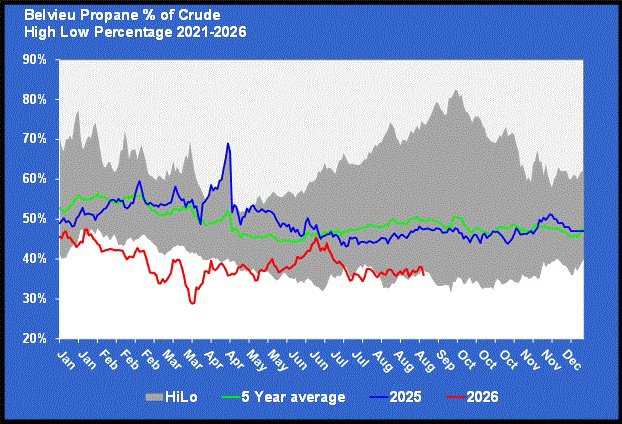
Chart 2 shows MB ETR’s price relative to WTI crude’s price on a simple percentage basis. Even though propane’s price is higher than it was at this time last year, its value relative to WTI crude is significantly lower. MB ETR is trading at 36 percent of the value of WTI crude compared to 47 percent of WTI at this point last year.
That shows that the increase in propane’s price is being driven by crude, and that the high inventory position has propane markets doing all they can to resist the updraft in prices created by crude and refined fuels. It is a global shortage of diesel as much as limited crude supply that is driving the market. U.S. retail diesel prices are at their highest ever at over $6 per gallon on a national average. Diesel is priced at $5 per gallon, the equivalent of $3.30 propane, at its New York Harbor trading hub.
Conway propane is resisting the run-up in prices even more than MB prices.
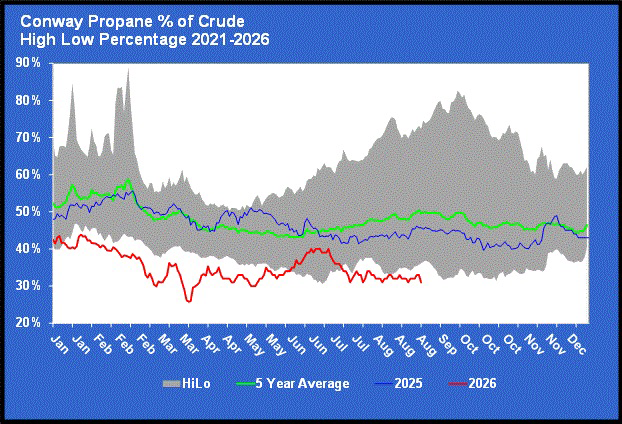
Conway propane is valued at just 32 percent of WTI crude and is 11 cents below MB ETR propane.
Propane being higher than it was at this time last year is unfortunate given the high inventory position and robust supplies. It’s unfortunate for propane consumers, but hopefully as they look at the price of gasoline and especially the price of diesel they will tolerate the increase in propane prices.
Charts courtesy of Cost Management Solutions.
To subscribe to LP Gas’ weekly Trader’s Corner e-newsletter, click here.
You May Also Like
-
Propane inventories fall as summer ends
Sep 8, 2026 -
US refineries not meeting demand
Aug 31, 2026 -
Propane inventories break record high
Aug 24, 2026



Subscribe to LP Gas
If you enjoyed this article, subscribe to LP Gas to receive more articles just like it.