
Debunking autogas myths
January 15, 2018 By LP Gas
Propane autogas is one of the fastest-growing markets in the industry, but retailers often have a hard time finding the right place to market this fuel source.
Read More



Propane autogas is one of the fastest-growing markets in the industry, but retailers often have a hard time finding the right place to market this fuel source.
Read More
Some industry members have spent the last year exploring how propane could capitalize on funding being made available as a result of the Volkswagen settlement.
Read More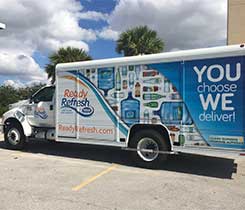
Nestlé Waters North America deployed more than 400 additional medium-duty beverage delivery trucks fueled by propane autogas.
Read More Roush CleanTech’s Todd Mouw talks success stories, opportunities and challenges in the autogas market.
Read More The company predicts the propane-powered Ford E-350 will emit about 90,000 fewer pounds of carbon dioxide over its lifetime than compared to gasoline-fueled counterparts.
Read More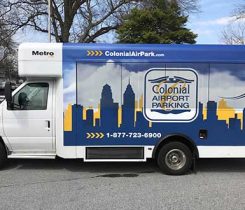
Colonial Airport Parking’s fleet will emit 730,000 fewer pounds of carbon dioxide over its lifetime while also saving the company on fuel and maintenance costs.
Read More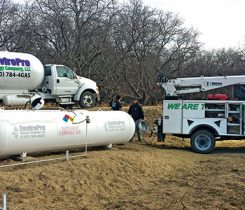
When Joe Silva launched EnviroPro as a propane retailer and natural gas provider in 2012, propane seemed to him an obvious fuel source for his fleet.
Read More
The Fulton County School System, near Atlanta, added 90 Blue Bird propane autogas-fueled school buses to its fleet, according to Roush CleanTech.
Read More
Roush CleanTech developed a propane autogas engine for class 4-7 vehicles and Blue Bird Type C buses certified to a lower nitrogen oxide level.
Read More Roush CleanTech’s 35-usable gallon, single-saddle propane autogas tank is designed for the Ford F-450 and F-550 models.
Read More