


What insurance inspectors really look for at propane operations
▶ Liability can hide in routine work
Inspectors also look for risks outside the plant. Customer tank agreements should clearly allocate responsibility and establish whose insurance responds first. Dispensers installed at hardware stores, campgrounds or other third-party locations need written agreements, appropriate insurance requirements and documented operator training.
Abbl recalls two PT Risk clients exposed to the same wildfire. One had a clear contract defining responsibility and successfully presented its insurance claim. The other lacked comparable language and lost assets and money. The difference was not the fire itself but the agreement in place before it occurred.
Underground tanks create another blind spot. Mullaney recently met an experienced propane operator who had taken over numerous customer-owned underground tanks but had never conducted baseline cathodic-protection testing. The operator assumed the installing companies had performed the required work, even though he could not visually examine the buried tanks.
“You just took responsibility for it the minute you hooked your hose up to it,” Mullaney says. “You need to do a beginning test on every tank that you take on and a three-year test thereafter.”
Even a small retail sale can transfer substantial liability. Mullaney cites a client that earned $7 selling and assembling a wet leg for a customer who later connected it incorrectly and suffered a burn. The resulting payout reached approximately $10,000 to $11,000.
“If you don’t do a lot of something, you shouldn’t do any of it,” Mullaney says. “Unless you’re doing 50, 80 or 100 underground tanks per year, you shouldn’t be doing underground tanks. If you’re doing one or two per year, you’re not an expert.”
▶ Consistency matters during acquisitions

Growth can introduce another type of exposure. Paul Brown, senior managing partner on the energy and infrastructure team within the Natural Resources specialty practice at The Baldwin Group, says private equity and strategic buyers are assembling propane platforms, but operating practices do not always become consistent as quickly as ownership does.
Brown recently advised a buyer that planned to keep two acquired operations separate until 2027 or 2028. One company had stronger driver screening, training and equipment monitoring. Leaving the weaker practices in place could have allowed plaintiffs’ attorneys to argue that the parent company knew how to reduce the risk but chose not to apply those controls throughout the business.
“The lack of integrating at that level would have really played right into a plaintiff’s hands to potentially drive punitive damages,” Brown says. “It’s totally OK to run them separately, but there are very key aspects that, when we uncover them, we have to flag.”
▶ Fleet practices face greater scrutiny
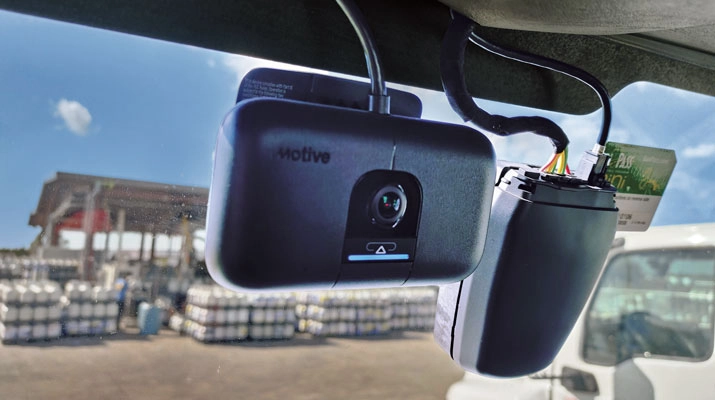
Commercial auto losses remain a major pressure point. Underwriters are examining driver selection, motor vehicle records, CDL and medical card status, preventive maintenance, training, cameras and telematics.
Carmon worked with one company that had to remove an otherwise valued employee from driving duties after a motor vehicle record issue made the person ineligible to operate a commercial or placarded vehicle. The company then tightened its review process. She recommends continued motor vehicle record monitoring rather than treating the record as a document checked only at hiring.
Technology is becoming part of that evaluation. Mullaney expects more carriers to require forward-facing cameras and use telematics to identify speeding, close following and other behaviors. Abbl cautions that managers must review the data and use it for coaching. Frommert says carriers increasingly expect cameras, GPS monitoring and formal OSHA and DOT training, even when tenured drivers are initially skeptical.
“Cameras are the biggest topic of conversation to manage a fleet,” Frommert says. “With the auto rates where they are, all the carriers want to see the telematics and fleet safety.”
Cramer says drivers may initially resist cameras but often come to recognize that footage can protect them when an accident is not their fault. The value is not a guaranteed premium discount for a particular device. It is the combined picture created by careful hiring, training, maintenance, monitoring and management response.
▶ Prepare long before renewal
Propane marketers should not wait for a renewal application to begin improving their risk profile. Carmon recommends giving the underwriter a narrative that explains any claim, the lessons learned and the corrective measures that followed. Completed loss-control recommendations, new cameras, improved training and stronger documentation can help distinguish an account from an average submission.
Cramer believes contacting an insurance adviser six to eight months before renewal is the way to go, particularly when changes must be implemented during the busy heating season.
“The industry has trained insureds to start talking two months before the renewal, but at that point, I think you’re almost too late,” Cramer says. “Call your insurance agent today and find out where the agent can help with policies and procedures to make you more attractive to underwriters.”
The best insurance outcome is not simply a lower quote. It is an operation that can demonstrate, every day and in every file, that safety is managed before a loss forces the issue.
Related articles
Why immediate response matters in propane accident investigations
Why additional insured provisions matter
You May Also Like
-
ThompsonGas acquires Dixie LP Gas and Gas Heat
Oct 22, 2026





Subscribe to LP Gas
If you enjoyed this article, subscribe to LP Gas to receive more articles just like it.