


Propane at a crossroads: Forecasting the industry through 2035
▶ Industry gallons forecast through 2035
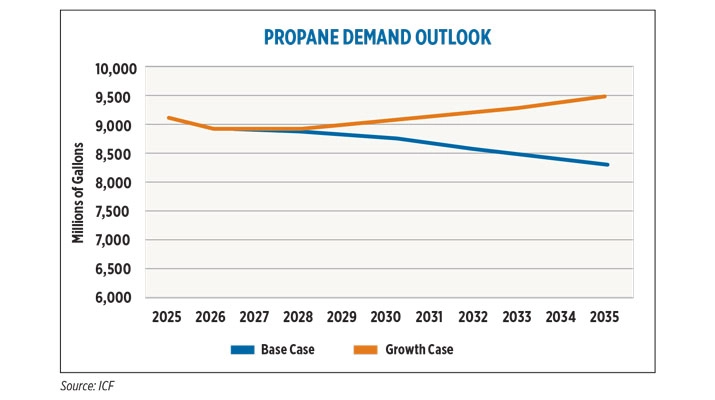
We have updated and extended the market forecast that we developed in 2019 to reflect actual industry results through 2024 and the changes in market trends discussed here. We also extended the forecast through 2035. As in the 2019 article, we have developed a base case and a growth case forecast. These forecasts are summarized in the chart above.
The base case reflects an “existing trends” scenario based on a continuation of current market trends and propane industry responses.
The residential sector is facing significant market erosion due to the improvements in heat pump technology in the space heating and water heating markets, combined with policy choices that incentivize electric technologies over propane. In the absence of fundamental changes in marketing and technology development approaches, we anticipate net market losses in the residential sector of up to 200 million gallons per year by 2030. Given the rate of technology penetration and the lag time associated with significant market changes, we expect losses to accelerate after 2030, reaching as much as 600 million gallons per year by 2035.

We expect the rest of the market to remain relatively stable, with moderate losses in the commercial and forklift sectors to be offset by moderate growth in other markets.
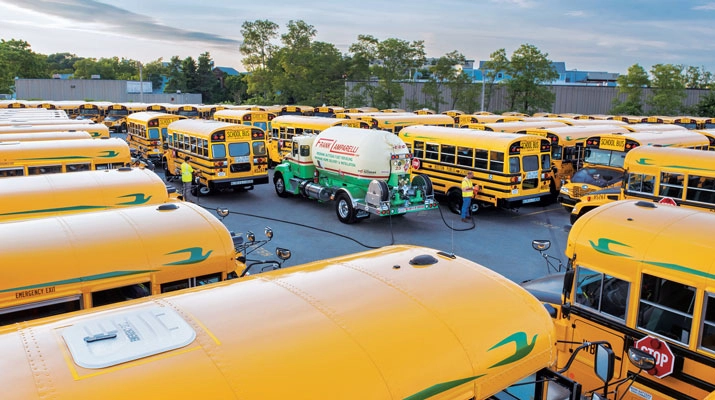
In our growth case, we are somewhat more optimistic regarding the industry’s ability to capture residential hybrid load (heat pump cold weather backup and the integrated power grid resiliency market) and to minimize expected losses in new construction market share in the residential market. We also include stretch goals to grow the propane school bus market from 5 percent to 25 percent by 2035, to grow the commercial lawn care market to 25 percent by 2035 and to begin penetration of other diesel replacement and backup power generation markets. These changes would offset most of the residential load loss in the base case and result in relatively stable markets through 2030 with modest growth thereafter.
How should the industry respond?
In our next article, we will offer thoughts on how to develop an effective industry response that would prepare it for the future.
Randy Doyle has held various leadership positions during his more than 40 years in the propane industry. Mike Sloan is a senior adviser at ICF, having worked for the energy consulting firm since 2007.
Related Articles
Sectoral overview of US propane demand trends
Looking back, moving ahead: 8 factors to define propane’s future
You May Also Like
-

Hilco acquires J-M Transport from Crystal Flash
Sep 30, 2026 -

Denver Propane Exchange sells to undisclosed buyer
Sep 29, 2026 -

Propane market outlook
Sep 28, 2026



Subscribe to LP Gas
If you enjoyed this article, subscribe to LP Gas to receive more articles just like it.